
Opinion | Regulation | UK Gambling
Is the UK Opening Up To Disaster Betting?
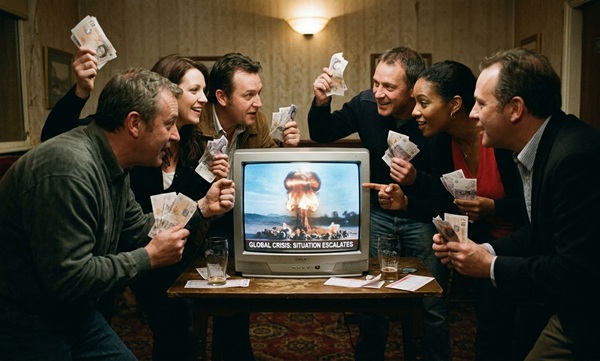
Betting on elections was already grubby enough. Betting on air strikes, regime change, assassinations and nuclear catastrophe is something darker, and the fact that parts of the industry are starting to treat it as just another market should worry anyone who still thinks gambling ought to have some moral edges left.
By Brian Taylor
My view
No, I don’t think disaster betting belongs in the British market. I don’t care how sleekly it’s packaged, how many caveats it’s presented with, or how often somebody in a fleece gilet calls it a “prediction contract” instead of a bet. If the underlying proposition is “Will a nuclear weapon be detonated this year?” then we’re no longer in the ordinary realm of political fluttering or novelty betting. We’re monetising death as an entertainment product.
The trigger for this argument is the recent surge in attention around prediction markets, especially after reporting on wagers tied to nuclear war, regime change and conflict in the Middle East. In the United States, platforms such as Polymarket and Kalshi have pushed event betting into territory that used to feel too grotesque even for a cynical industry. One market invited people to speculate on “nuclear Armageddon”. Another wave of trading drew scrutiny after well-timed bets around military action on Iran and the removal of Ayatollah Ali Khamenei. That is, at the very least, bad taste. It’s entirely possible that it was also the military equivalent of insider trading. Once markets like these exist, they don’t just reflect public anxiety. They turn anxiety, death and geopolitical chaos into something tradable. That changes the moral atmosphere around the events themselves.
My growing concern is that this isn’t some distant American oddity anymore. The Gambling Commission said in February that if prediction markets operate in Great Britain, they’d need a Gambling Commission licence and would be treated as betting intermediaries, basically the same legal family as betting exchanges. The government said much the same in Parliament a few days later. In other words, the UK position isn’t, “Absolutely not.” It’s closer to, “If they come here, they’ll come through the gambling door.” That’s a serious distinction, and it means this is no longer an abstract debate about Silicon Valley weirdos punting on apocalypse from abroad.
The line I think we’re crossing
Sports betting at least rests on contests designed to be bet on. Political betting is already muddier, because the subject is real power, real law, real public life. Disaster betting goes further still. It asks the market to turn human suffering, state collapse or mass casualties into a speculative toy. That’s not just another product vertical. It’s a moral downgrade.
Defenders of prediction markets tend to reach for three arguments. First, they say these markets are just information tools. Prices aggregate dispersed knowledge, so betting markets can supposedly reveal what informed people really think. Second, they say the whole thing is hypocritical because financial markets already reward people for anticipating bad outcomes. Third, they say people have long been able to bet on politics and current affairs, so pretending disaster markets are uniquely offensive is a bit precious.
All three arguments contain a sliver of truth, which is why the subject isn’t completely trivial. But I still think they collapse under scrutiny.
The “information tool” defence sounds cleverer than it is
Yes, markets can reveal expectations. That’s not nonsense. But the moment people start pretending that a retail-facing gambling product on nuclear detonation is a noble instrument of price discovery, we’ve gone too far. The UK’s own regulators have already drawn a hard distinction between genuine financial products and all-or-nothing contracts sold to ordinary punters. The FCA permanently banned binary options to retail consumers in 2019, saying they posed inherent risks and caused consumer harm, with Christopher Woolard, Director of Strategy for the FCA, describing them as “gambling products dressed up as financial instruments.” That line hangs over this whole debate like a neon sign.
That’s why I’m suspicious whenever prediction markets are dressed up in trading language, all “buy yes”, “sell no”, probability charts and glossy interfaces. Sometimes a new wrapper really does mark a new thing. Quite often, it’s just lipstick on an old impulse. If the customer experience is basically a wager on whether something awful happens, then calling it a contract doesn’t make it ethically refined. It just makes it easier to market to people who’d never think of themselves as gamblers.
Why this feels worse than ordinary novelty betting
- The subject matter is mass harm, not a one-off stunt.
- The traders may include people with access to sensitive information.
- The moral hazard isn’t imaginary. These markets can reward proximity to violence and political upheaval.
- The packaging is designed to normalise something that would sound grotesque if described plainly.
- The UK gambling sector is already under pressure over consumer harm, so adding a fresh category of ugly speculation looks reckless.
The insider-trading problem isn’t a side issue; it’s the issue
One of the grimmest parts of this story is how quickly these markets invite suspicion that somebody, somewhere, might know something. The Guardian’s reporting on this pointed to apparent insider-betting concerns around conflict-related markets, and Al Jazeera has reported that a Polymarket user reportedly made more than $500,000 in a single day with a position tied to the removal of Iran’s supreme leader, with other accounts reportedly opening shortly before the strikes and concentrating solely on Iran-related wagers. Even if some of that turns out to be less sinister than it looks, the point stands. A market on war, assassination, abduction or nuclear use creates a standing question that no healthy gambling sector should want hanging over it: who knew what, and when?
Britain already knows how nasty that can get. Last year’s general election betting scandal ended with 15 people being charged over alleged cheating under gambling law. That was over the date of an election. An election. If that kind of controversy can poison political betting, imagine what happens when the subject is military action or a leader’s death. The integrity risk doesn’t shrink as the stakes rise. It explodes.
And no, it’s not really the same as short selling
This is the point clever people always reach for. “Hang on,” they say, “investors can short a company they think is heading for disaster. Why is betting on bad outcomes suddenly immoral?” Fair question. But I still think it’s the wrong analogy.
Short selling, whatever you think of it, is tied to a tradable asset. A share price reflects the value, prospects and risks of a company. Shorting can contribute to liquidity and price discovery, and in some cases, it exposes fraud or obvious overvaluation. You can dislike the culture around it without denying that it sits inside a recognisable financial system with economic functions beyond the thrill of being right about something awful.
A retail wager on whether a nuclear weapon will be detonated before New Year’s Eve is different in kind. It isn’t helping capital allocation. It isn’t disciplining management. It isn’t uncovering cooked accounts. It’s a direct consumer-facing punt on catastrophe itself. The public-interest case is wafer-thin. The voyeuristic case is obvious. That doesn’t mean every bad-news trade is moral and every disaster bet is evil, but it does mean the “markets profit from misery all the time” line is too crude to carry the argument.
Where I land on the ethics
I don’t think the ethical problem is simply that someone might make money from bad news. That happens all over modern capitalism. The ethical problem is that these products invite ordinary consumers to treat mass death and geopolitical collapse as a form of recreational speculation. They lower the tone of the market, they cheapen public life, and they create ugly incentives where proximity to disaster can look like an edge.
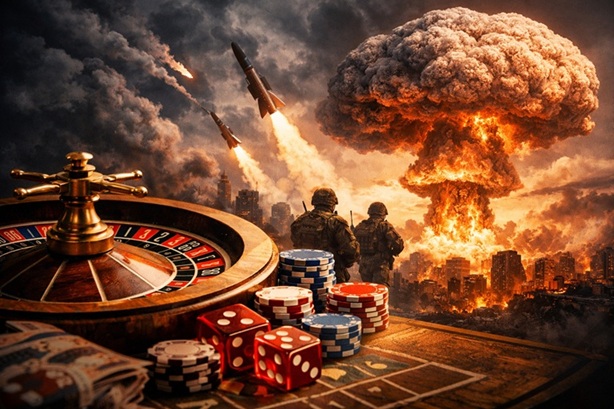
The UK shouldn’t wait for a scandal bigger than the market
The gambling industry has a habit of pushing until somebody tells it to stop. That’s not because everyone in it is wicked. It’s because markets expand into whatever regulators leave lying open. We’ve seen that with bonuses, VIP schemes, affordability, loot boxes, crypto, and endless attempts to smuggle gambling towards audiences who don’t think they’re gambling. Prediction markets on war and disaster fit the pattern perfectly.
There’s already precedent in Britain for saying some novelty markets are simply improper. In the SunBets case, the Commission took issue with novelty bets that should never have been offered, including one that risked encouraging a criminal act. That matters here. If regulators can recognise that a pitch invader market crosses a line, they can certainly recognise that a mass-casualty or nuclear-conflict market does. The principle isn’t hard to state. If the bet’s whole appeal depends on criminality, death, terror, or catastrophe on a historic scale, the answer should be no.
There’s also a reputational point that the industry would be wise not to ignore. British gambling already struggles to convince the wider public that it can regulate itself responsibly. Opening the door to disaster betting would be the kind of self-inflicted stupidity that confirms every worst suspicion people already have. The short-term novelty and commission revenue wouldn’t be worth the stench.
So is the UK opening up to disaster betting? Potentially, yes, in the sense that the legal framework could accommodate prediction markets as licensed betting intermediaries. But should it? I don’t think so. Not because I’m shocked by the existence of ugly markets, and not because I’ve suddenly become naïve about how finance or gambling works. I just think there’s still a meaningful difference between tolerating hard-edged speculation and turning apocalypse into a clickable retail flutter.
Sometimes a market is just a market. Sometimes it’s a social signal. A country that lets people casually bet on nuclear war is saying something about what it’s prepared to normalise. Britain doesn’t need to say that. It certainly doesn’t need to say it through a licensed gambling product.
Quick questions
Would prediction markets be treated as gambling in the UK?
Yes. The current official position is that, if they operate in Great Britain, they’d require a Gambling Commission licence and would be treated as betting intermediaries.
Is disaster betting just a new form of political betting?
No. It goes further. Political betting is already controversial, but disaster betting pushes directly into war, mass death, terrorism, assassinations and existential risk.
Could the UK simply ban this category?
It could certainly take a harder line, either through licence conditions, enforcement priorities or new policy, if regulators and ministers decide these markets are incompatible with a socially responsible gambling regime.