
Are UK Slots Colder Than They Used To Be?
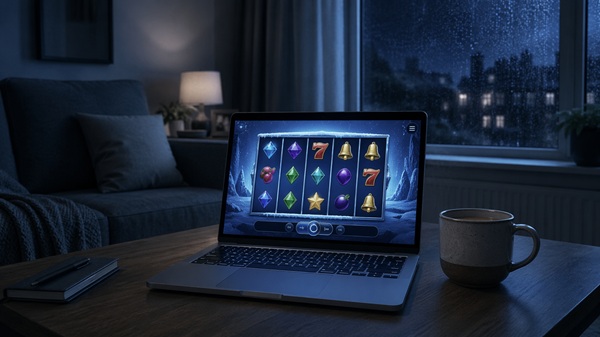
Yes, I think they are. There’s more to the idea than simple rose-tinted glasses and nostalgia. Modern UK slots often do feel flatter, slower, less wild and less alive than they once did. The interesting question is whether that’s because the games have lost something valuable, or because the British marketplace has done away with a lot of the tricks that used to make losing feel less unpleasant than it really was.
By Brian Taylor | 23 April 2026
The short answer
UK slots do feel colder now.
That change is partly emotional, and partly structural.
Some of the missing “warmth” was really just speed, noise, false momentum and easier escalation.
Since October 2021
Autoplay, turbo-style speed-up features and losses disguised as wins have been out of bounds on UK slots.
Since 2025
Online slot stakes are capped at £5 for adults 25 and over, and £2 for those aged 18 to 24.
But the market hasn’t died
Slots GGY still rose 11% year on year in Q4 2024 to 2025, with active accounts hitting a new peak.
When players say slots feel cold now, they usually aren’t making a technical point. They mean the games feel less juicy. Less dangerous in that slightly thrilling way. Less capable of pulling you into a little trance where the spins blur together and every tease feels like a promise of better things to come. They mean there’s less heat in the room, even when they’re playing alone on a sofa with a phone in one hand and a cup of tea in the other.
And honestly, I get it. If you played online slots a few years ago and you play them now on properly licensed UK sites, the rhythm really has changed. The older versions of the market often felt hyperactive. They hurried you along. They encouraged you to keep the chain moving. They hid some of the ugliness of losing under sound, animation, autoplay, quick-spin mechanics and the general sense that something exciting was always about to happen if you just kept feeding the machine. Modern UK slots are much more likely to make you sit with what you’re doing.
Why the UK scene is different now
This isn’t just an “everything was better in the old days” thing. The UK has changed the online slots environment in ways you can actually feel as a player. The market didn’t evolve on its own. It was pushed.
Safer-by-design rules
The UK rules cut out autoplay, banned features that speed up play or create an illusion of control, and stopped games celebrating returns that are actually a loss overall.
A slower tempo
Remote slots must run with a minimum 2.5-second gap before the next game cycle can start, which changes the pulse of play even if the graphics still try to look lively.
Hard stake ceilings
Since 2025, there’s a £5 ceiling for older adults and a £2 ceiling for 18 to 24-year-olds on UK online slots, which makes old-fashioned escalation much harder.
That last point matters a lot. Much of the old “emotional temperature” of online slots didn’t just come from bright symbols or dramatic soundtracks. It came from speed married to the ability to scale up quickly. Even players who never staked silly amounts were gambling in an atmosphere where the whole product was built to feel frictionless. Once you strip out the frantic pace and then add actual stake ceilings on top, you don’t just change the maths. You change the mood.
I think that’s one reason some UK players describe today’s slots as “dead behind the eyes”. That sounds melodramatic, but I know what they mean. A lot of the old little manipulations are gone, and those manipulations weren’t cosmetic. They were part of the emotional engine. Quick spin, slam stop, autoplay and losses disguised as wins all helped create the sensation of momentum. They made the games feel warmer because they kept the player from sitting too long with reality.
There’s a cruel irony there. Some of what players miss was never really warmth at all. It was concealment. If the old market wrapped ordinary losing in pace, lights and pseudo-action, then the colder modern version may simply be more honest about what a slot session usually is. It’s harder to romanticise a loss when it’s laid bare.
A quick timeline of why the feel changed
That 2023 finding is worth sitting with for a second, because it suggests the opposite of what we’re trying to say here. Officially, the Commission found no significant negative impact on enjoyment following the 2021 design changes. I’ll take their word for that. I’m not going to pretend that official research doesn’t exist just because it complicates the story. But I do think “enjoyment” can be a slightly blunt instrument here. A slot can remain enjoyable while still feeling colder, calmer or less rewarding. Those aren’t the same judgment.
If anything, that’s my central point. UK slots haven’t become boring in a universal, objective sense. Plenty of people still like them, and plenty clearly still use them. The market data makes that obvious. Slots GGY was up 11% year-on-year in the first quarter of 2025, spins were up 6%, and average monthly active accounts hit 4.5 million, which the Commission described as a new peak for that dataset. So the idea that Britain has regulated slots into a waking oblivion is plainly wrong.
What the official numbers suggest
These figures don’t prove whether slots feel warmer or colder, but they do show something important: the product is still enormous, and people are still showing up.
I’d go further than that. The official statistics show that remote casino games generated £5.0 billion in GGY in the year to March 2025, with £4.2 billion of that coming from slots. That tells you slots aren’t just surviving in the UK. They’re still the biggest draw at casinos. So when I say they feel colder than they used to, I’m not saying the product has collapsed or that players have fallen out of love en masse. I’m saying the emotional texture has changed while the commercial importance has not.
For me, the coldness comes from four places at once. First, there is the slower pace. Second, there is the loss of little control-theatre features that used to let players feel involved in speeding things up. Third, there is the harder limit on how quickly you can turn excitement into heavier staking. Fourth, there is the slightly more clinical atmosphere produced when a game has to show you time played and total losses or wins more clearly. None of those changes is dramatic on its own. Together, they create a very different psychological weather system.
There is also a smaller but still telling point around feature buy-ins. The UK market used to flirt with the sort of slot culture that lets players jump straight into the fireworks by buying into bonus features. The Commission intervened over those products, reminding operators that games must not actively encourage loss-chasing or bigger staking, and six operators removed feature buy-in facilities after being contacted. If you care about the “temperature” of modern slots, that matters. A world with fewer shortcuts into instant chaos is bound to feel more restrained.
So is colder actually bad?
The case against it
Colder slots can feel flatter, stingier and less exciting. The sessions are less likely to sweep you away. For some players, that means the entertainment value really has dropped.
The case for it
Some of the missing warmth was exactly what caused problems. A colder slot may simply be a slot that is doing less psychological hustling while you lose.
That’s where I land, really. I don’t want to write a fake-scandal piece where every older version of slot play was rich and glorious and every newer version is sterile misery. That’s too simple. Some of the older warmth was fun, yes. Some of it was also engineered pressure. The modern British approach has tried to sand down the most manipulative edges, and it would be odd if that didn’t change the feel of the games.
If I’m being blunt, I’d rather have a colder product than a deceptively warmer one built on speed, concealment and bad behavioural nudges. But that doesn’t mean the industry gets a free pass. If UK slots now feel colder, developers and operators still have a challenge on their hands. They need to make games that are engaging without falling back on the old bag of tricks. That’s harder work than simply letting pace and noise do the seduction for them, but it’s the work in front of them.
I also think players deserve to be more honest with themselves about what they’re mourning. Are they mourning better game design, or are they mourning a stronger buzz? Those are not the same thing. A slot that’s less capable of pulling someone into fast, detached, escalating play may well feel colder. From a player-protection point of view, that may be exactly the point.
So, are UK slots colder than they used to be? Yes, I think they are. The rhythm is slower, the illusions are fewer, the stakes are tighter and the old manufactured heat has been turned down. The real takeaway, though, is that this colder feeling isn’t necessarily proof the games have become worse. It may simply mean the UK market is making players feel more of what slot gambling actually is, and a bit less of what it used to pretend to be.