
UK Casino Market
2026 Bonus Rules
Are Casino Bonuses Still Worth It?
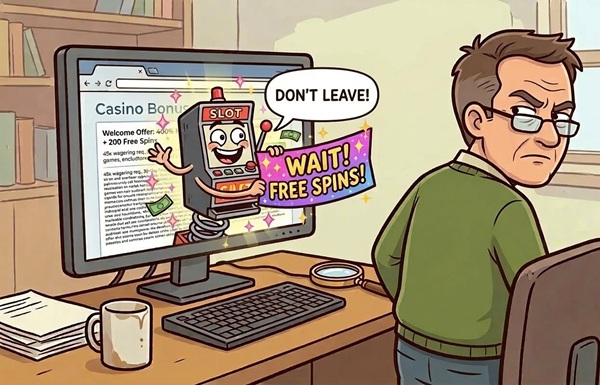
I’ve spent years watching casino bonuses get louder, bigger, sillier and, quite often, less useful. The January 2026 UK rule changes were supposed to clean that up. In some ways, they have. In others, they’ve simply changed the way the disappointment is packaged.
By Brian Taylor
My short answer
Yes, some casino bonuses are still worth taking, but not for the reasons operators used to push. They’re no longer worth much as grand fantasy objects, those old inflated “up to” numbers designed to make your pupils widen. However, they’re still always worth looking at because the better ones are now simpler, cleaner and less likely to trap you in a ludicrous grind.
Before January 2026, the UK bonus scene had started to feel like a competition in who could produce the most theatrical headline while hiding the least attractive bits in the small print. You’d see £50 here, £200 there, a tumble of free spins, some points system no normal person had asked for, and the usual maze of expiry windows, game restrictions, max bet rules and rollover terms. If you were experienced, you learned to translate the jargon. If you were new, you were expected to learn by getting stung.
The Gambling Commission’s January changes were meant to take a hammer to that culture. Mixed-product promotions, the old “bet on sports and get casino spins” type of offer, were banned. Wagering requirements on bonus funds were capped at 10x. On paper, that was a big win for players, and I still think it was the right move. The trouble is that operators didn’t just sit there and take the hit. They adapted, as they always do.
The biggest improvement is also the least glamorous one
The best thing the new rules did was make some bonuses easier to understand. That doesn’t sound exciting, but it matters far more than another big golden banner screaming about “epic rewards”. A bonus you can actually assess properly is worth more than a supposedly larger one built to confuse you.
I think that’s the part casual players often miss. Wagering requirements were never just an annoying technical detail. They were the mechanism that turned some offers from “mildly useful” into “basically impossible.” A £10 bonus at 50x meant you had to churn through £500 before the bonus winnings could be withdrawn. That was never fair nor reasonable. Bring that down to 10x, and suddenly the same £10 bonus requires £100 of playthrough instead. Still not a sure shot, but no longer out of the question.
Playthrough burden on a £10 bonus
This is the cleanest way to understand why the 10x cap matters. It doesn’t make bonuses magical. It just makes them less punishing.
£500 playthrough
£100 playthrough
So yes, from a fairness point of view, bonuses have improved. The days of really grotesque rollover demands being normalised as just part of the furniture should now be behind us in the UK market. Mixed-product nonsense has also been cut back, which is another good thing. If I’m signing up for a casino offer, I’d rather not be nudged into a sports bet first like I’m completing a scavenger hunt.
But here’s where this article takes its less sentimental turn. Casinos didn’t respond to these changes by saying, “Right, we’ll keep the old generosity and just make the terms kinder.” Quite a few of them responded by shrinking the offer itself. The headline numbers got tidier, but they often got smaller too. The market has moved away from some of the old chunky cash-match packages and towards simpler, lower-friction free-spin offers, no-wager packages, and more tightly defined rewards.
Representative bonus snapshot, mid-2025 versus March 2026
This isn’t a full market census, because there isn’t a neat public database for that. It’s a representative snapshot of visible published offers that shows the broader direction of travel.
BetMGM
Mid-2025 published shape:
100% match up to £200 plus 100 free spins
March 2026 published shape:
Play £10 and get 200 free spins
What changed:
Cleaner and easier, but far less headline cash value.
Coral
Mid-2025 published shape:
£50 bonus plus 1000 Coral Coins
March 2026 published shape:
100 free spins when you play £10 on slots
What changed:
Less clutter, but also a noticeably smaller-looking package.
Ladbrokes
Mid-2025 published shape:
£100 matched deposit casino offers and more layered packages were still being heavily marketed in 2025
March 2026 published shape:
£30 casino bonus or 100 free spins style offers
What changed:
More transparent, less grand, more obviously aimed at casual use.
That’s the trade-off in a nutshell. The bonus market is less silly than it was, but it’s also less flashy. If you used to enjoy chasing huge match percentages and inflated intro packages, you’ll probably feel the modern UK scene has become stingier. In one sense, that’s true. In another, it’s simply become harder for operators to sell a fantasy they know most players were unlikely ever to convert cleanly.
This is why I think the right question isn’t “Are bonuses still worth it?” in the abstract. It’s “Worth it for what?” If you want a bonus to massively increase your bankroll on day one, then no, many of today’s UK offers will feel underpowered compared with the old headliners. If you want a bonus that gives you a lower-drama way to try a site, spin a few games, and maybe come away with something real without trekking through a swamp of conditions, then yes, some of them are still absolutely worth taking.
Where I think the value still lives
- No-wager or very low-friction free-spin packages.
- Bonuses tied to clear, single-product activity.
- Offers with sensible expiry windows and obvious eligible games.
- Packages that are modest but genuinely usable, rather than huge but built to collapse in practice.
- Sites that don’t make you decode three layers of promo language before you can tell what’s actually on offer.

There’s another change worth noting. Because mixed-product promotions have been squeezed out, the market now feels more segmented. Sportsbook offers stay in their lane. Casino offers stay in theirs. That reduces confusion, which I’m all for, but it also means operators have less room to create those all-in-one “ecosystem” welcome packages. Again, that’s probably better for clarity, but it contributes to the feeling that modern bonuses are narrower and less expansive than they used to be.
I also think the rule changes have exposed something the industry would rather not admit, which is that a lot of the old bonus value was cosmetic. Strip away excessive wagering and cross-sell fluff, and some operators are left with the uncomfortable question of what their offer is actually worth on its own terms. For some, the answer has been encouraging. Paddy Power, Betfair, Sky Vegas and others are leaning hard into no-wager or low-friction spins. For others, the answer has been to reduce the headline and hope players are relieved enough by the cleaner terms not to notice.
Personally, I’d rather have a smaller bonus I can understand than a giant one that treats me like a fool. That’s where I’ve landed after years of reading these offers and watching the same tricks get recycled. But I’m not going to pretend the modern market is all upside. A lot of casinos really have taken the opportunity to cut value while sounding virtuous about transparency. Both things can be true at once. The rules have made the market fairer, and operators have used that fairness as cover to get meaner.
So are casino bonuses still worth it? Yes, but only if you stop judging them by the old standards. The smartest way to look at a 2026 UK casino bonus is no longer to ask how big it sounds. Ask how usable it is. Ask how quickly you understand it. Ask whether it keeps your winnings clean, your choices clear, and your playthrough burden sensible. In short, ask whether it behaves like something designed for a real player rather than a marketing meeting.
That’s my conclusion. The bonus market hasn’t died. It’s just sobered up a bit, albeit reluctantly. The best offers in the UK now tend to be smaller, sharper and less theatrical. If you’re still chasing old-school giant headline deals, you’ll think the fun has gone out of it. If you’re more interested in whether a bonus is genuinely claimable, understandable and worth your time, then the answer is that some of them are better than they’ve been in years.