
Do Casino Accounts Get Restricted The Moment You Start Winning?
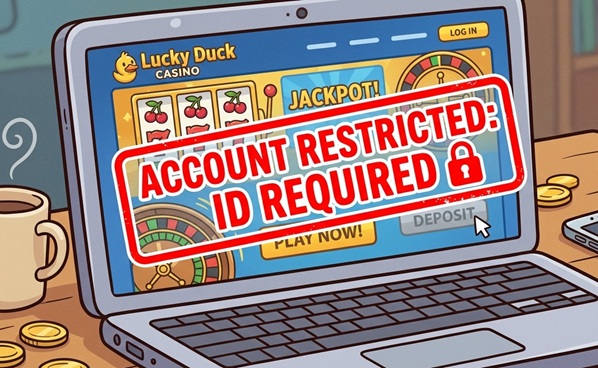
I understand why people ask this, because it often feels exactly that way. You can deposit without any fuss, lose money without anyone showing the faintest concern, and then the moment a decent win lands, the whole tone changes. Suddenly, the casino wants documents, explanations, patience, and perhaps a small sample of your blood type.
By Brian Taylor
My short answer
Not quite. In most cases, the winning itself isn’t the offence. Winning is the moment your account becomes worth examining. That’s when casinos start checking whether your play looks unusual, whether bonus terms were stretched, whether source-of-funds questions need asking, or whether the business suddenly sees more risk in you than value.
What changes when you win
You become visible.
Your account gets reviewed.
And anything awkward in your activity suddenly matters far more than it did five minutes earlier.
That distinction is the whole story. If we were talking about sports betting alone, there would be a stronger case for saying some accounts are restricted because the operator doesn’t like sharp customers. In casino play, the picture is muddier. Slot wins are usually variance, not genius. Nobody has cracked Cleopatra’s jackpot with a notebook and a pencil behind the ear. So when a casino account gets slowed down, reviewed or restricted after a decent win, it usually isn’t because the site thinks you’ve become some sort of one-person syndicate. It’s because the win has dragged the account into a part of the system where more questions start getting asked.
And yes, from the player’s side, that can still feel deeply suspect. I’ve had that sinking feeling myself, and most experienced punters have as well. Everything seems smooth while the money is flowing one way. Then the balance swings in your favour and the account suddenly discovers a love of process. If you want the blunt version, here it is: casinos are rarely frightened of winners in the abstract. What they are frightened of is paying the wrong person, paying out after missing a compliance issue, or letting a customer cash out before they’ve looked closely enough at the pattern behind the play.
The point most players miss
A casino doesn’t need to believe you’ve “beaten” roulette or outwitted a slot to make your life awkward. It only needs to decide that your account has become interesting enough, expensive enough, or unusual enough to deserve scrutiny.
That scrutiny can come from several directions at once. The first is simple identity and payment verification. In the United Kingdom, remote gambling businesses are supposed to verify a customer before that customer is permitted to gamble, and they’re not meant to save a document request for the withdrawal stage if they could reasonably have asked for it earlier. In theory, that should make the whole process cleaner. In practice, plenty of players still experience the withdrawal as the moment when scrutiny becomes an issue, because that’s when the operator has both motive and opportunity to look harder.
Then there is anti-money-laundering control, which is where the mood gets heavier. Casino regulation has long treated the sector as a high-risk area for money laundering, and remote casino operators are expected to identify and verify customers when the relevant threshold is triggered, as well as apply enhanced due diligence when transactions are unusually large, oddly patterned, or otherwise hard to explain. Put simply, that means a decent win or a big withdrawal can be the moment your account stops being a bit of entertainment and starts looking like a risk file.
Trigger one
Withdrawal visibility
A customer can drift along unnoticed while losing small and medium sums. A large cash-out changes that instantly because real money is about to leave the system.
Trigger two
Bonus pattern concerns
If the win sits next to bonus play, game-switching, stake behaviour, or something a casino labels irregular, the account can get messy very quickly.
Trigger three
Compliance and affordability
Your account may hit thresholds or patterns that trigger financial vulnerability checks, safer gambling contact, or source-of-funds questions.
This is where our title question becomes both right and slightly wrong at the same time. Players are right to notice that problems often start when they win. They are wrong, though, if they assume every restriction is simply a casino sulking because the house lost a round. In many cases, the win is not the reason, but the spotlight. It shines on everything else. Your verification history. Your transaction path. Your bonus use. Your deposit pattern. Whether the account has been screened recently. Whether the operator can comfortably explain your activity if someone at the regulator’s end asks questions later.
That last point matters more than it should. Much of modern online gambling is shaped by defensive compliance. Operators have seen enough enforcement action to know that failing to ask awkward questions can be very expensive. So the instinct becomes predictable. If a customer has become costly, visible, or unusual, gather more information rather than less. Freeze first if necessary. Review now. Explain later. From the firm’s point of view, that’s prudence. From the punter’s point of view, it can look an awful lot like selective suspicion.
And yes, bonus terms are part of the problem
I don’t say this because I think every casino is nobly protecting the public. I say it because bonus play has created its own arms race of rule-writing and account-monitoring. Once promotions are involved, some operators become intensely alert to anything they think looks like low-risk wagering, game-hopping after a large hit, or behaviour designed to clear wagering requirements in a way they dislike. That doesn’t mean every accusation is fair, but it does mean many winning balances arrive with baggage attached.
If you’ve spent years around this market, you start to see the pattern. A player takes a bonus, lands a good win, and then the casino begins examining not just the balance but the route by which the balance appeared. Which games were played? At what stake? In what sequence? Was there a low-contribution game followed by a switch to a high-contribution one? Was there a run of spins or hands that bumps against the operator’s idea of irregular play? Paddy Power’s current casino fair-play rules, for example, still spell out a long list of play patterns that can lead to withdrawals being withheld or winnings confiscated while a bonus is active. That tells you something important. In casino gambling, “winning” and “winning cleanly under every promotional rule” are not always treated as the same thing.
Now, to be fair, not all restrictions are about promotions, and not all suspicious reactions are bad faith. If a remote casino sees transactions that are unusually large, oddly structured, or lacking an obvious economic purpose, enhanced due diligence rules can bite. That may mean source-of-funds documents, proof of earnings, or a pause while the account is reviewed. Again, from the player’s angle, it can feel like punishment for winning. From the operator’s angle, it’s often described as legal necessity. The two experiences can coexist, and they do.
This is where the industry often loses the argument with me. I don’t object to genuine due diligence. What I object to is the way too many operators still let scrutiny arrive late, vaguely, and in a manner that feels nakedly tied to a withdrawal. The Gambling Commission itself has been clear that operators should not introduce friction when a customer tries to withdraw if the same information could have been sought earlier. It has also said complaints about withdrawals remain the number one issue raised by consumers. When the regulator has to keep saying that, you know this isn’t just a few sore losers having a whine about it on the internet.

What fair treatment would look like
Verify early. Explain clearly. Flag likely document needs before money is deposited. Keep bonus rules sane. Review accounts consistently whether the customer is losing or winning. Most of the anger in this area comes from the sense that scrutiny only becomes urgent once the casino owes someone money.
What players often experience instead
A smooth deposit journey, a cheerful stream of marketing, then a hard change of tone at cash-out. More documents. More delay. More language about internal reviews. More implications that the account has become problematic only after it stopped being profitable for the house.
That’s why so many gamblers use the word “restricted” even when the operator would probably choose softer language. Sometimes the account isn’t fully closed. Sometimes it’s merely suspended pending checks. Sometimes deposits are blocked while documents are assessed. Sometimes the customer relationship is ended under safer gambling procedures. The effect, though, is the same from the player’s seat. Access is interrupted. Confidence goes. The balance sits there under a cloud. The semantics stop mattering.
There is another awkward truth here as well. Some operators are much more candid than others about the fact that profiling sits behind account decisions. Sky Vegas’ privacy material currently states that profiling may play a part in decisions to restrict or close accounts, and that further anti-money-laundering enquiries can involve financial information, public sources, and additional source-of-wealth documents depending on a customer’s characteristics and activity levels. I don’t mention that because Sky is uniquely sinister. I mention it because it reflects the broader reality of the market. The modern casino account isn’t just a wallet. It’s a behavioural record, and sometimes a scored risk object.
That’s why I think the lazy answer, “No, casinos never restrict people for winning”, is just as daft as the melodramatic one, “Yes, every casino bans winners on sight”. Both miss what actually happens. In real life, the account gets restricted when winning collides with some other source of discomfort for the operator. Maybe it’s compliance. Maybe it’s bonus cost. Maybe it’s unusual transactional behaviour. Maybe it’s a safer gambling concern. Maybe it’s a term the casino thinks you breached. Maybe, frankly, it’s a mixture of all of them, and the casino would rather lose you than keep arguing about it.
The uncomfortable answer
Do casino accounts get restricted the moment you start winning? Not automatically, and not always for the petty reason players sometimes imagine. But winning is very often the moment your account becomes worth a closer look, and once that happens, the casino may find several other reasons to slow you down, question you, suspend you, or decide that it no longer wants the relationship.
I also think it’s worth separating licensed UK casinos from the offshore mess. In the British regulated system, an operator cannot simply make up any old nonsense and hide behind a clause. The Commission has said operators should not have terms giving undue discretion over when and how winnings may be withheld, and they’re expected to treat customers fairly, openly, and transparently. That doesn’t mean every player will enjoy the process. It does mean there are at least standards to argue from when things go wrong. If a site is outside the UK Gambling Commission’s licensed system, you lose even that comfort, which is another reason UK players should keep well clear of offshore alternatives.
So where do I land? I think players are right to be suspicious of any system that seems relaxed while they’re losing and intense when they’re collecting. That instinct isn’t foolish. The pattern is real. But I also think the better criticism is more precise than the pub version. Casinos usually don’t panic when someone gets lucky on a slot. They react because the win has made the account visible enough, valuable enough, or odd enough to trigger parts of the machine that were sitting quietly in the background before. The machine then goes looking for reasons to intervene, and it often finds one.
That, in the end, is the answer I’d give any seasoned player who asks the question in good faith. No, it isn’t always the moment you start winning. But it is very often the moment the casino starts paying proper attention, and in modern online gambling, that can amount to much the same thing.