
Research Article | UK Online Gambling | Ownership Transparency
Hidden Ownership Networks in Online Gambling

The online gambling scene looks crowded and competitive, and sometimes it is. Sometimes, on the other hand, it only looks that way. Behind apparently separate casino and betting brands, the same owners, licence holders, or platform operators often reappear.
By Rob Hill
Brand
The logo and tone players recognise first.
Operator
The licensed business legally responsible for the gambling service.
Parent group
The wider company that may own several brands at once.
For UK players, this matters more than it might seem. If you think you’re moving to a completely different operator after a bad experience, you may simply be walking from one front door to another in the same building. Shared ownership can shape everything from bonus style and account checks to customer support, safer gambling tools, and how complaints are handled.
Some of these networks are hiding in plain sight. Flutter’s reporting shows that Paddy Power, Betfair, Sky Betting & Gaming and Tombola sit within the same broader group. Entain’s portfolio includes brands such as Ladbrokes, Coral, Gala and Foxy. Evoke, the renamed 888 group, includes William Hill, 888 Casino, 888 Sport, and 888 Poker. These aren’t small fringe examples. They’re major brands that many players still think of as entirely separate entities.
Where the picture gets murkier
Ownership is only one layer. Different gambling sites can also share software, payment systems, customer-service arrangements, and compliance structures. So even when two sites don’t share the same parent company, they may still feel strangely alike for a reason.
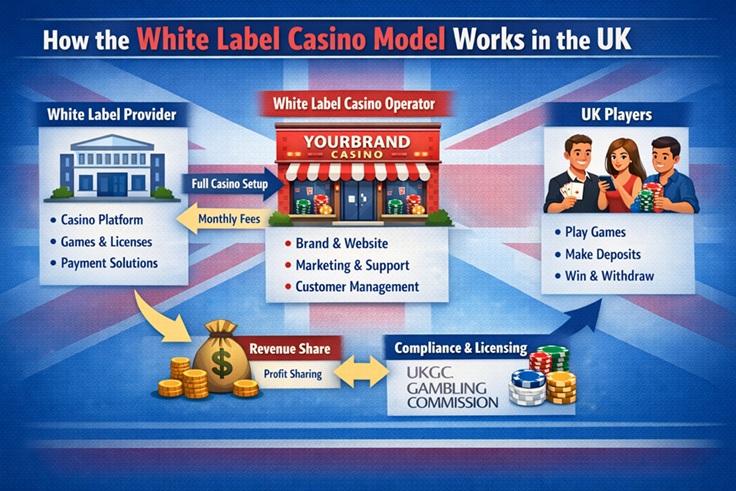
The slipperiest part of the market is the white-label model. The Gambling Commission’s explanation is simple enough: a white-label domain is run by a licensed operator in partnership with another organisation or operator. That means the branding a player sees may not belong to the company carrying the regulatory burden. In the United Kingdom, the licence holder remains responsible for compliance, even if another party provides the public-facing identity.
That distinction is not academic. In May 2025, the Gambling Commission announced that TGP Europe had surrendered its licence after regulatory action that included a proposed £3.3 million penalty. The Commission said TGP’s white-label model involved running sites using the branding of other businesses, and it criticised failings around due diligence, source-of-funds checks, and the handling of risks linked to third parties. That case made the point rather clearly: if you can’t see who is really behind a brand, you may also struggle to see where accountability begins and ends.
The regulator itself has acknowledged that modern gambling structures can be difficult to read. In its consultation response on ownership and financial reporting, published in December 2025, the Commission said the changes were partly driven by increasingly complex global structures where ownership and interests aren’t always clear. It also confirmed that reporting changes would come into force on 19 March 2026, including a move from a 3% to a 5% threshold in one part of its ownership reporting rules.
The Role of the Player
So what should players do with all of this? First, stop assuming the brand name tells the full story. Second, read the footer and terms, because the legal entity named there matters more than the mascot at the top of the homepage. Third, use the Gambling Commission public register. As of 6 March 2026, that register shows 2,674 business records and allows searches by business name, trading name and domain. It also flags domain status, including where a site is listed as white label.
The practical value is obvious. If two sites share the same licence holder, the same style of terms, the same payments journey, and the same back-end feel, that’s not necessarily a coincidence. Sometimes the market is genuinely diverse. Sometimes it’s just one company speaking through several megaphones.
Hidden ownership networks in online gambling aren’t a conspiracy theory. They’re part of how the industry is built. Some are straightforward parent-company structures. Some are white-label arrangements. Some are more layered webs involving finance, control and third-party relationships. None of that is automatically improper. But it does mean players should be careful about confusing branding with independence.
For a UK audience, the sensible habit is verification. Check who owns the site. Check who licenses it. Check whether the domain is listed as white label. In a market this crowded, that isn’t pedantry. It’s basic consumer self-defence.
Quick questions
Why do different gambling sites sometimes feel the same?
Because they may share the same owner, licence holder, platform, or white-label arrangement, even if the branding looks unrelated.
What’s the easiest way to check who runs a casino?
Look at the legal name in the footer, then search that name and the domain on the UK Gambling Commission public register.
Does a different brand always mean a different company?
No. In online gambling, different branding often sits on top of shared ownership or shared infrastructure.