
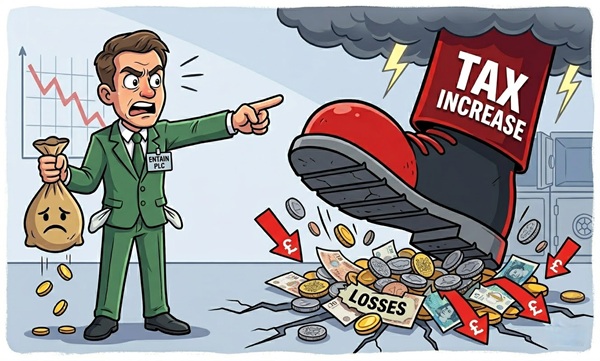
Entain, the owner of Ladbrokes and Coral, has posted another annual loss and pointed the finger squarely at Rachel Reeves’s gambling tax changes. I understand why the company is angry. I’m just not convinced that “this is the government’s fault” tells the whole story.
In brief
The headline: Entain reported a £680.5 million post-tax loss for 2025.
The company’s explanation: A £488 million impairment tied to looming UK gambling tax increases.
My view: The tax hit is very real, but blaming the government alone is much too neat.
This is one of those stories where the headline and the reality are not quite the same thing. If you stop at the headline, it sounds as though Ladbrokes has had a miserable year and is now blaming the Chancellor for the damage. That makes for a tidy bit of outrage, and I can see why the papers ran with it. But once you dig into the numbers, it becomes a more interesting argument than that.
Entain did indeed report a large post-tax loss. No point pretending otherwise. But the loss was heavily shaped by a non-cash impairment charge against its UK business after the government announced a much harsher tax regime for remote gambling. That’s important because it means the figure isn’t simply a story of the tills stopping ringing. In fact, the company’s own results show revenue rising, underlying EBITDA improving, and management still talking in bullish terms about the shape of the business. This is not a company curled up under a table. It’s a company taking an accounting hit and using that hit to make a political point.
What Reeves actually did
The big change is the new tax treatment of remote gambling. Remote Gaming Duty rises from 21% to 40% from 1 April 2026, while a new 25% remote betting rate arrives from April 2027. The government’s argument is that online casino-style products are more harmful and cheaper to run, so they should be taxed more heavily than retail gambling or horse racing.
That is a brutal increase, and I don’t think operators are wrong to call it brutal. A jump from 21% to 40% isn’t some gentle policy nudge. It’s a proper whack. If you run a big online casino business, it lands like a brick through the window. Even people who think the sector should pay more tax can still admit that the scale of the jump is savage. So on that narrow point, yes, I’ve got some sympathy with Entain. Reeves did make life materially harder for online gambling groups, and she did it in a way that was always going to hammer valuations, future projections and investor mood.
But here’s where I part company with the simpler version of the story. Entain’s own results also describe a business that is, by its own telling, in very decent shape. Underlying EBITDA came in ahead of expectations. Revenue grew. BetMGM in the US continued to strengthen the wider group. Reuters reported that the market rather liked what it saw, with Entain shares jumping after the results. That should immediately tell you this isn’t a plain old “business collapsing under Labour tax madness” tale. If the market believed the core business had genuinely gone rotten, the mood would have looked very different.
Why Entain has a point
The tax rise is severe, fast, and large enough to change how operators value their UK online businesses.
Where the complaint is insincere
The company is still growing, still profitable on an underlying basis, and still telling investors it can absorb much of the pain.
Why I’m sceptical
When a big operator says “the business has never been in better shape” while also blaming the government for causing it hardship, I start reading the small print.
There is another reason I don’t think Reeves can wear this one alone. The British gambling industry has spent years making itself politically vulnerable. It’s grown fat on remote gaming, especially slots and casino products, while repeatedly giving regulators reasons to tighten the screws. Entain itself is hardly some innocent victim dragged off the street. In 2022, the Gambling Commission hit the group with a £17 million regulatory settlement over social responsibility and anti-money-laundering failures, calling the breaches serious and warning that further failings could put the licence at real risk. When an operator with that history then complains that government has become too hostile, I can understand the frustration without swallowing the self-pity.
That doesn’t mean Reeves is beyond criticism. Far from it. My own feeling is that governments love taxing gambling because it looks morally righteous and politically cheap. They can present it as raising money from a grubby industry while claiming the mantle of public health at the same time. It’s a lovely little double act. The trouble is that blunt tax rises do not happen in a vacuum. Operators will cut promotions, push harder on efficiency, look for market exits, and probably become even less generous than they already are. Some of the pain will be taken by shareholders, yes. Some of it will land on staff and suppliers. Some of it will absolutely be passed on to customers in the form of weaker offers, less generosity and a more joyless market.
And if we’re being really honest, the biggest groups are not the ones I worry about most. Entain itself has said its scale should help it navigate the new environment and even grab share from smaller rivals who struggle. That tells you a lot. Big firms are perfectly capable of denouncing a tax hike in public while quietly appreciating the way it crushes weaker competition. I’ve seen this pattern before in gambling. Regulation and taxation get described as existential threats, then a year later, the largest incumbents are still standing, the smaller names are gone, and the surviving giants have a bigger slice of a duller pie.
What’s been left out of the blame game
The loss figure was heavily driven by an impairment charge, not just day-to-day trading pain.
Entain’s own underlying numbers were much healthier than the headline loss suggests.
The sector has also been dealing with tougher bonus rules since January, not just tax pressure.
And the industry’s own compliance failures have done plenty to invite a harsher political mood.
That broader pressure matters. January’s UK bonus changes have already made life harder for operators that like aggressive acquisition tactics. The new limit on wagering requirements and the ban on mixed-product incentives were not designed as tax policy, but they form part of the same wider squeeze. In other words, operators are dealing with a British market that’s becoming less forgiving across the board. If you’re a giant group like Entain, it’s tempting to roll all of that frustration into one easy villain, and Reeves is the obvious one because her name is attached to the Budget. But the truth is that the sector has been heading into a tighter, less indulgent era for some time.
So, is it fair to say Ladbrokes has posted losses and blamed the government? Yes, broadly speaking, that’s what happened. But is it fair to place the blame squarely on the government and Rachel Reeves? No, not squarely. Partly, yes. Squarely, no. The tax rise is real, aggressive and politically deliberate. It has clearly damaged the paper value of UK online gambling operations. But Entain’s own accounts show a business that is still strong enough to talk confidently about growth, mitigation and future cashflow. That’s not the language of a company broken by one Chancellor.
If anything, this looks to me like a row about who gets to control the narrative. Reeves wants to say she’s taxing harmful remote gambling harder and doing something morally important. Entain wants to say the government is punishing a regulated industry that already faces intense scrutiny. Both positions contain some truth. Neither tells the full story on its own.
My verdict
Reeves deserves some of the blame because the tax rise is undeniably harsh. But Entain does not get to act like an otherwise healthy industry has been struck down by random cruelty from on high. This is a profitable giant taking a non-cash hit, defending its margins, and trying to win the argument about who should pay for a tougher gambling regime. As somebody who has watched this sector for years, I’d say the honest answer is simple. The government made the pain worse, but the industry spent a long time helping to create the political conditions for that pain in the first place.