
Player Safety
What Happens to Your Money If a Casino Goes Bust?
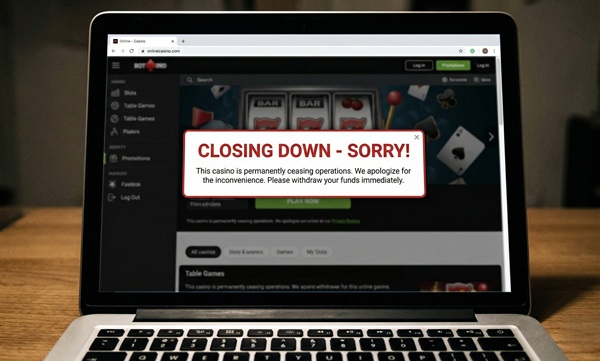
Most gamblers worry about bonuses, withdrawal times and whether a site is about to ask for half their life story when they finally win something. Far fewer stop to ask the nastier question. If a casino collapses tomorrow, what actually happens to the money sitting in your account tonight?
By Rob Hill
Hard truth one
A UK licence does not mean your casino balance is protected in the same way money in a bank account is protected.
Hard truth two
Operators do have to tell you what level of protection applies, but most players never think to check until the worst has already happened.
Hard truth three
The difference between “licensed” and “fully safe” is much wider than most ordinary punters realise.
I feel like I have a pretty good handle on how most gamblers think about risk at a casino. They’ll examine a welcome offer down to the last free spin. They’ll compare withdrawal times with the same level of forensic detail you’d apply to buying a new car. They’ll worry, quite reasonably, about verification checks, payment methods, slot RTPs, and whether the casino is going to play stupid games over some obscure term when it’s time to cash out. What they rarely do is sit there on a wet Tuesday evening and ask themselves whether the casino and its operator might simply stop existing.
That’s understandable. Insolvency feels remote until it isn’t. But it is also one of the few risks in online gambling that can instantly turn a perfectly ordinary account balance into something between a legal headache and dead money. And the ugly little secret is that many players assume they’re better protected than they really are.
My short answer
If a casino goes bust, your money is not automatically ringfenced in the way most people imagine. Some operators offer meaningful protection. Some offer partial protection. Some effectively offer none. The fact that a business is licensed in the UK does not, on its own, guarantee you get your balance back.
That point matters because British players are used to the language of regulation. A site is licensed. It has safer gambling tools. It has terms and conditions. It sits on the public register. All of that creates an atmosphere of order, which is fair enough as far as it goes. But order is not the same thing as insurance. The Gambling Commission’s own public guidance is blunt on this. Money staked or deposited with a gambling business is not protected by the Commission or by the government in the way personal bank accounts are protected. That line alone should make more players sit up than it probably does.
And that comparison matters even more now because bank deposits in the UK have explicit protection through the Financial Services Compensation Scheme, up to £120,000 per eligible person per authorised firm. Gambling balances don’t sit inside that kind of safety net. So when somebody says, “Well, it’s licensed, so my balance must be safe,” what they’re really doing is importing a banking instinct into a gambling market that doesn’t work that way.
The system the gambling market does have is more awkward and, frankly, easier to ignore. Licensed operators must tell customers how their funds are treated if the business becomes insolvent. There are now three broad ratings: not protected, medium protection, and high protection. If you want the practical translation, it’s basically this. Not protected means your money would likely form part of the company’s assets if it collapses. Medium protection means arrangements exist to protect funds, but there is no absolute guarantee you’ll get them back. High protection means the money is held in a formal trust-style arrangement, legally separated from the business, with independent oversight.
Not protected
This is the ugly one. If the operator fails, your balance is likely to be treated as part of the company’s assets. In plain terms, you would probably lose it.
Medium protection
There are arrangements in place, such as segregation and related mechanisms, but it’s still not absolutely guaranteed that you get the money back.
High protection
This is the strongest arrangement. The money is legally separate from the business itself and overseen independently, giving you the best chance of seeing it again.
Now, on one level, I’m glad that this rating system exists and has been tightened. Operators must disclose the rating when you deposit, and if they hold customer funds on a “not protected” basis, they now have to remind you every six months, state how much they’re holding, and make you acknowledge that warning before you can continue gambling with those funds. That’s an improvement. It drags the issue out of the fine print and into the light a bit more.
But I still think the whole setup asks too much of the player. It assumes ordinary gamblers will casually absorb insolvency disclosures in the middle of a deposit process designed to get them playing as quickly as possible. It assumes they’ll understand the difference between separate accounts, trust arrangements, and company assets. It assumes they’ll treat the rating as something more than one more box to click through on the way to the lobby. I’m not convinced most do, and I’m not convinced the industry seriously expects them to.
There is another wrinkle here that deserves more attention. The Commission says remote operators must hold customer funds in a separate account. Many players hear that and think, “Well there you are, problem solved.” It isn’t solved. Separate is not the same thing as untouchable. The Commission’s guidance is explicit that, although online operators must keep customer funds in a separate account, this alone does not guarantee customers get any of their money back if the business runs into financial difficulty. That is one of the most important lines in the entire system, and I’d wager most players have never read it.
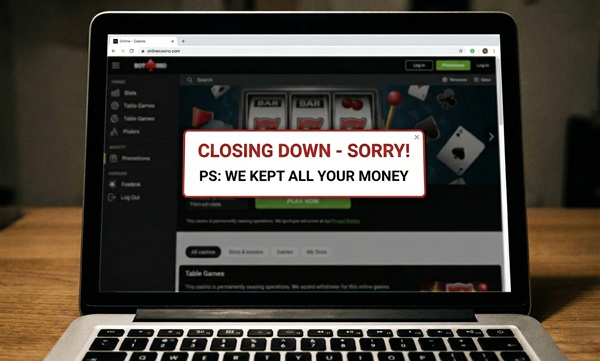
The bit most players misunderstand
“Segregated” does not automatically mean “guaranteed”.
“Licensed” does not automatically mean “fully protected”.
And “I saw a safer gambling logo in the footer” means nothing at all.
The position is slightly better than total chaos, to be fair. Some things do count as customer funds and can fall within the relevant protection arrangements. Money you’ve deposited into your online account counts. Winnings owed to you or left in your account count. Bonus money that you have become entitled to under the offer terms also counts. So the framework isn’t totally hollow, but it’s still a long way from the neat certainty people often imagine.
That is why I think this topic matters more in 2026 than it might have done a few years ago. The market has become harsher, more consolidated, and in some corners, more fragile-looking. We’ve already seen brand closures, white-label retreat, tax pressure, and plenty of noise about how hard Britain now is for some operators. None of that means a wave of licensed casino failures is around the corner. But it does mean the old, comforting assumption that a familiar brand plus a UK licence equals total financial safety has to be dispelled.
The Commission itself also makes an important admission that should keep everybody grounded. When it licenses a gambling business, it looks at suitability, including financial circumstances, but it doesn’t oversee businesses day to day or monitor their financial health directly in real time. That’s fair enough, because no regulator can act as a live corporate babysitter. Still, it means players should abandon any fantasy that the regulator is standing over every licensed casino with a stethoscope and a crash cart.
If I sound sceptical, it’s because I am. I don’t think the system is worthless, but I do think it leans too heavily on disclosure as a cure-all. British regulation often assumes that if the customer is told something once in clear terms, the problem has been meaningfully addressed. Sometimes that’s true. Sometimes it isn’t. In this case, I think disclosure helps, but only up to a point. A warning that appears during the deposit process is better than no warning at all, but it’s no substitute for genuine security.
What I actually do
I try not to leave more money parked in a casino than I need for the session or the immediate withdrawal.
I pay far more attention than I used to to how customer funds are described in the terms.
And I never kid myself that a licence is the same thing as a bank-style guarantee.
What I’d tell ordinary players
Check the customer funds rating before you assume anything.
Don’t treat a casino wallet like a savings account.
And if a site is operating on a “not protected” basis, think carefully about whether you’re comfortable leaving meaningful sums sitting there.
That last point is the practical heart of it for me. I’m not saying players should panic every time they log into a casino. I’m saying they should be less casual. Gambling balances were never meant to function as cosy little digital piggy banks, and the regulation around insolvency makes that plain if you bother to look. Leave what you need. Withdraw what you can. And if an operator is telling you, in effect, that your money would likely go into the corporate wreckage if it failed, act accordingly.
So, what happens to your money if a casino goes bust? The honest answer is unsatisfying, which is exactly why more people should ask the question. Sometimes you may get it back. Sometimes you may get part of it back. Sometimes you may have the best available chance because the operator used a high-protection arrangement. And sometimes, if the protection is weak or nonexistent, you are simply another unsecured customer who’ll be left empty-handed if it all goes wrong.
My conclusion
The UK’s current system is better than nothing, but it’s not the comforting safety blanket many players imagine. It relies heavily on disclosure, on customer attention, and on people understanding that “licensed” is not a magic word. If you want the simplest possible answer, here it is. Your money might be protected, partly protected, or barely protected at all, and that is exactly why this is one of the most important dull-sounding questions in online gambling.