
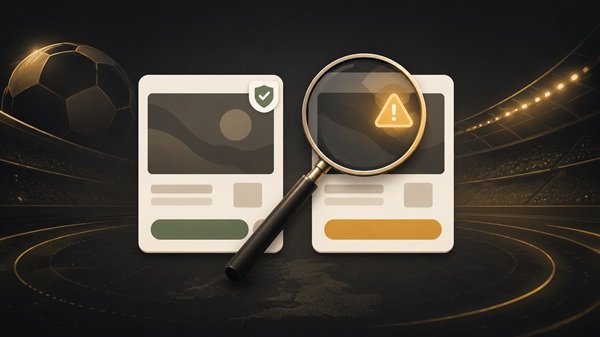
Three in four of us can’t tell a licensed betting ad from an illegal one, says a new survey, and it’s landed right in the middle of the World Cup ad blitz. The warning’s worth hearing. So is the question of who paid for it.
What the survey found
74% struggle to spot an unlicensed betting promotion on social media
10% find it easy to tell if a betting promo is from a licensed UK platform
80% say they’d never knowingly use an illegal site, yet most can’t identify one
7% think UK rules are very effective at preventing illegal gambling
Here’s a number worth chewing on. Three in four UK adults can’t reliably tell whether a betting promotion they’re scrolling past comes from a licensed UK operator or an illegal one. That’s the headline from a new YouGov survey of just over 2,000 adults, and with the World Cup in full swing, it’s arrived at the precise moment millions of casual punters are being shown more gambling ads than at any other point in the year.
The detail is stark. Only one in ten people say it’s easy to spot whether a social media betting promo comes from a properly licensed platform. Eight in ten reckon they’d never knowingly use an illegal site, yet most admit they couldn’t actually pick one out of a feed. That gap, between how safe people think they are and how safe they really are, is the whole story. One of the executives behind the research called nearly three-quarters of UK adults “sitting ducks,” and on these figures, that’s hard to argue with.
Let me be clear up front: the underlying warning is true. Illegal gambling sites are a genuinely rotten place to lose your money. They typically offer no independent dispute resolution, no self-exclusion through GAMSTOP, little or no real age verification, and no guarantee your winnings will ever be paid. If a licensed UK casino messes you about, you’ve got a complaints process, an ADR provider and a regulator standing behind you. If an offshore site decides to sit on your balance, you’ve got an angry email and not much else. Licensing matters most when something ordinary goes wrong, and that’s exactly the point here.
The research came bundled with a campaign. Entain, the owner of Ladbrokes and Coral, commissioned the survey and has rolled out a series of short World Cup videos fronted by the food content creator Big John, designed to teach younger social media users the difference between licensed and unlicensed operators. As influencer tie-ins go, it’s a fair idea, and the content points people towards sensible checks. Anything that gets a 22-year-old to look for a licence number before depositing is worth doing.
Here’s the thing, though. This survey didn’t fall out of the sky. It was paid for by a major gambling operator, and the timing is doing an awful lot of work.
Context matters, so let me put my critic’s hat on for a second. The industry is in the fight of its life against the new 40% online gaming tax, the slot stake caps and the looming financial risk checks, and its single most effective weapon against all of that is the black market. The argument runs like this: squeeze licensed operators too hard, and players flee to unregulated sites. So every poll that makes the black market look enormous, and every finding that people can’t spot illegal ads, also happens to strengthen the case for easing the regulatory pressure on the very firms commissioning the polls. That doesn’t make the numbers inaccurate, but it does mean you should read them with your eyes fully open.
The regulator, tellingly, is far more guarded than the operators. After a long four-part research project, the Gambling Commission said late last year that it still can’t produce a reliable estimate of the black market’s size, and that where it has decent data, it sees no clear sign of sustained growth in illegal gambling. Set that next to the trade body’s projection that the black market could swell to £33bn by 2028, and you can see the gulf between the official “we honestly don’t know” and the industry’s “it’s exploding”. When the people doing the regulating and the people doing the lobbying describe the same thing so differently, the truth usually sits somewhere in the careful middle.
There’s an awkward wrinkle in the “us good, them bad” framing too. A recent investigation found games built by UK-licensed software suppliers turning up on some of the very illegal sites everyone’s warning about, and several of those suppliers sit inside the same trade body sounding the alarm. The licensed industry’s hands aren’t spotless here, which is worth remembering when it casts itself purely as the consumer’s guardian. And let’s not pretend the licensed firms are shy during a World Cup. The reason your feed is wall-to-wall betting right now is mostly the legal operators, not the illegal ones.
None of that changes what you, as a player, should actually do, which is the part the survey gets right. If you can’t tell a legal betting ad from an illegal one, the fix isn’t to panic. It’s to learn the handful of checks that settle the question in about thirty seconds.
The checks that work
✓ Look for a UK Gambling Commission licence number, usually down in the website footer.
✓ Verify it yourself on the UKGC public register rather than trusting a badge on the site. Anyone can paste a logo; not everyone appears on the register.
✓ Check for real safer-gambling tools: deposit limits, time-outs and GAMSTOP self-exclusion. Illegal sites tend to skip these.
✓ Be wary of promos that sound too generous, push crypto-only payments, or reach you through a random account or influencer message.
✓ If a “casino” shows up in your feed but nowhere on the register, treat that as your answer.
Are British adults easily fooled by illegal gambling ads? On the survey’s own evidence, yes, and it’s a real problem worth fixing. The Big John videos and the licence-checking advice are sound, and I’d happily point anyone towards them. Just keep one thing in mind as you do. The operator paying for the research has a strong commercial interest in you being frightened of the alternative to its own sites, in a year when it’s battling hard against tax and regulation. The safety message deserves your attention. The scale of the scare deserves your scepticism. Both can be true at once, and a sharp player keeps both in their head while doing the one thing that actually keeps them safe, which is checking the licence before the deposit.