
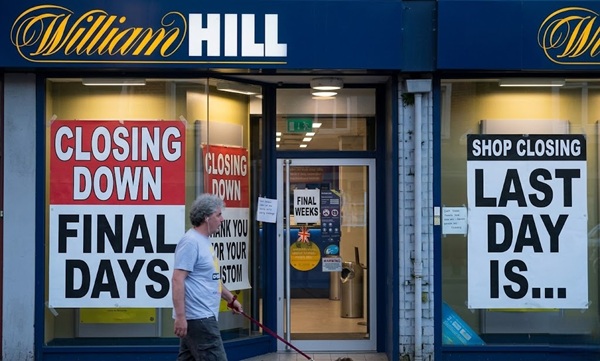
Today is the day Britain’s new 40% remote gaming duty arrives, and the industry has wasted no time showing what that may look like in practice. William Hill’s parent company is set to shut around 200 betting shops from May. It’s a brutal headline, but the story underneath it is a little messier than “government taxes online gambling, therefore betting shops close”.
What changed today: Remote Gaming Duty has jumped from 21% to 40% for accounting periods beginning on or after 1 April 2026.
What William Hill is doing: Parent company Evoke is preparing to close around 200 shops from May after what it described as a thorough review.
My take: The tax rise is clearly painful, but this is not a simple story of one tax rise directly killing betting shops. It’s a story about a pressured group deciding where the pain lands.
Today, the new tax regime has stopped being the monster on the horizon and become real policy. From today, remote gaming operators are paying 40% instead of 21% on profits from online gaming. That is a savage jump, and even if you think the government was right to go after remote casino-style products more aggressively than before, it would be absurd to pretend this is a mere technical tweak. It’s a proper shock to margins, valuations and planning.
The government’s own explanation has been pretty simple all along. Remote gaming, in its view, is more harmful than other forms of gambling and generally cheaper to run, so it should be taxed more heavily. It also expects the change to raise more than £800 million in 2026 to 2027 alone. In Treasury terms, that probably looks neat enough. In commercial terms, it looks like somebody has taken a meat cleaver to one of the most profitable parts of the sector and then acted surprised when the screaming starts.
That screaming has now arrived on the high street. William Hill is set to close around 200 betting shops from May onwards, with staff told this week and Evoke blaming increased cost pressures on the regulated sector, including the significant tax increases announced in the autumn budget. This is not completely out of the blue. Evoke had already warned in January that the budget dealt a significant blow to the group and said mitigation would include shutting retail stores that were no longer sustainable.
The line that matters
William Hill’s closures are not really a same-day reaction to today’s tax change. They’re the physical expression of decisions that have been brewing ever since the November budget made Evoke’s UK economics look worse.
That distinction matters because otherwise the whole thing turns into a slightly dishonest morality play. The easy version goes like this: Labour hits gambling with tax, William Hill shuts shops, case closed. But the actual picture is more nuanced. The tax that takes effect today is Remote Gaming Duty. It hits online gaming, not retail betting shops directly. Retail betting shops were spared the immediate tax increase that online gaming faces today, and the separate new 25% remote betting duty doesn’t take effect until April 2027. So if you want to be precise, these closures are not the direct result of a shop tax. They are the result of a group-level response to a broader deterioration in the business’s economics.
I think that’s worth saying clearly, because it changes how we should read the story. Evoke isn’t saying each of these individual shops suddenly became impossible because the duty on online slot and casino profits rose this morning. What it’s really saying is that the group as a whole needs to offset the budget damage somewhere, and retail is where some of that pain is going to fall. That may be commercially rational. It’s not quite the same thing as a neat one-tax, one-closure cause-and-effect story.
What’s fair to say
The budget worsened the economics for Evoke, and Evoke is now cutting parts of the business it sees as weaker or less sustainable.
What’s too simplistic
Pretending today’s remote gaming tax directly targets betting shops. It didn’t. The closures are a group decision in response to wider pressure.
Still, I wouldn’t let the government off the hook just because the mechanics are more layered than the headline implies. HM Treasury knew what it was doing when it raised remote gaming duty from 21% to 40%. It knew operators wouldn’t absorb that without flinching. It also admitted in its own policy paper that the tax rise could be passed on to consumers through worse prices or returns, and that some people might switch to illegal gambling instead. So ministers can’t really feign innocence when large operators start cutting investment, talking about the black market, and trimming their retail footprints to keep the wider ship afloat.
At the same time, I’m not hugely moved by the more theatrical parts of the industry’s self-presentation here. Evoke is not some poor corner-shop chain mugged by random state cruelty. It’s a large, heavily scrutinised gambling group whose UK exposure already looked awkward before today. It has been under strategic pressure for months, and the budget didn’t create all of its problems from nothing. It intensified them. There is a difference.
That’s why I think the closures are best understood as a brutal piece of portfolio management. Evoke has decided that if the online tax environment is deteriorating, if future betting tax changes are looming, and if the regulated sector is becoming less forgiving overall, then it needs to cut back where it can and preserve what it sees as its core estate. Its own language makes that plain enough. It wants the right shops in the right locations. It’s not disappearing from the high street altogether.
Why this still matters beyond William Hill
Because it shows how an online-focused tax shock can still reshape the offline market.
Because it gives every other mixed retail-online operator a fresh excuse to review its estate.
And because once a major chain starts cutting this deeply, the argument that the sector can just quietly absorb the new tax regime starts looking much less convincing.
That’s the broader significance for me. The story is not just that two hundred William Hill shops are going. It’s that the new tax era is beginning in exactly the way critics warned it would, with operators pointing to jobs, shops and legal-market capacity rather than quietly accepting a lower margin and moving on. Some of that is lobbying theatre, yes. Some of it is also plainly real.
I also think there’s a deeper irony here. Ministers have spent years trying to push gambling towards a more tightly regulated and supposedly safer market. Fair enough – that’s their job. But if one consequence of that effort is a more expensive legal market, fewer high-street outlets, weaker commercial confidence and a more enticing black-market sales pitch, then the policy trade-offs deserve more honesty than they usually get. Tax is not just revenue collection in this sector. It’s market design by another name.
So, is William Hill right to blame the tax hike? Partly, yes. The increase landing today is enormous, and the wider budget package clearly worsened the group’s UK outlook. Is it the whole story? No, not remotely. The closures also reflect Evoke’s own strategic weakness, its group-level cost priorities, and the reality that retail often ends up carrying the pain when big gambling groups need to defend margins somewhere else.
My verdict
Today’s tax hike is real, ugly and economically disruptive. William Hill’s shop closures are real too. But the most accurate reading is not that the government taxed betting shops into closure overnight. It is that a very large tax shock to online gambling has landed in a group that was already under pressure, and Evoke has decided to spread the damage across its retail estate. That still leaves the government with plenty to answer for. It just means the full story isn’t a simple tale of cause and effect.