
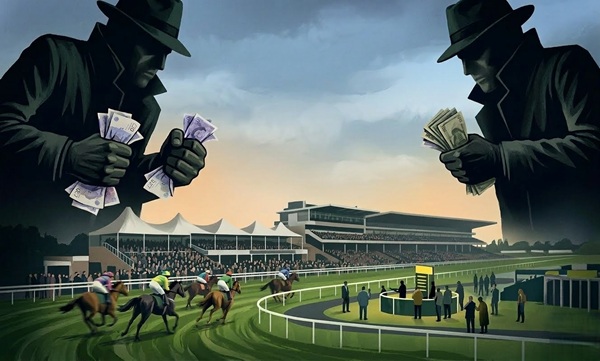
Cheltenham has always been a moment when the licensed betting industry likes to show off its strength. This year, it’s also become a reminder that the black market isn’t just a casino problem any more – if it ever really was in the first place.
The headline figure
The Betting and Gaming Council says up to £60 million may have been staked with illegal operators during Cheltenham Festival week. That estimate rests on two wider claims: that Cheltenham attracts around £1 billion in betting turnover, and that roughly 6% of all wagers in Great Britain are now placed with illegal operators. Whether you take the figure as an educated guess or an exact measurement, it’s far too large to dismiss as background noise.
What makes this story interesting isn’t just the number itself. It’s what the number suggests about where the black market is gaining traction. In recent years, when people in the legal sector talked about offshore or unlicensed gambling, the conversation often drifted towards online casinos, slots, self-excluded players being targeted elsewhere, and the wider remote market. The Gambling Commission’s own research in 2025 was framed as a study of illegal online gambling, while other reports focused on illegal operators’ share of the online gambling marketplace as a whole. Cheltenham, though, is a reminder that sports betting, and racing in particular, isn’t somehow insulated from the same pressure.
That matters because Cheltenham isn’t just another facet of British betting life. It’s one of the most recognisable betting events in the calendar, one that attracts mainstream punters, racing regulars, casual accumulators, on-course action and wall-to-wall promotional noise. If illegal operators can carve out a meaningful share during that week, they’re not nibbling around the edges. They’re feeding on one of the legal market’s prestige events.
Why this feels like a shift
The black market narrative in Britain has often been wrapped around remote casino play, offshore sites ignoring self-exclusion, and people looking for casinos with fewer restrictions. Cheltenham adds a different picture. It suggests mainstream sports betting traffic can leak too, and in very large volumes when the event is big enough.
The link between illegal sports content and illegal gambling has already become hard to ignore. In January, reporting based on a Campaign for Fairer Gambling study said illegal sports streams in Britain had doubled to 3.6 billion over three years, and that 89% of those streams carried advertising for unlicensed bookmakers. The same reporting said illicit operators were taking £379 million in the first half of 2025 and had reached 9% of the UK’s online gambling market, up from 2% in 2022. Those figures are contested by parts of the industry, as black market estimates often are, but the wider point is hard to miss. Illegal sports consumption and illegal betting are increasingly living in the same ecosystem.
That’s why the Cheltenham number lands so awkwardly. It makes the black market problem look less like a niche online casino destination and more like something that can latch on to mainstream sports events with alarming ease. Horse racing has always had a slightly different social profile from slots or online casino play. It feels older, more traditional, more rooted in the legal British market. If even that can be bitten into this sharply, then the old comforting distinction between “sports betting over here” and “dodgy offshore casino stuff over there” starts to look thin.
Illustrative comparison
This isn’t a full market-share model. It’s a simple visual of the current estimates made about Cheltenham week.
About £940m
Up to £60m
None of this means the black market suddenly cares more about racing than casinos. I wouldn’t go that far. Remote casino remains an obvious target because it’s continuous, easy to access, and often tied to the very consumers most vulnerable to offshore marketing, especially self-excluded users. The Guardian reported in December that offshore bookies were still aggressively targeting people on GAMSTOP, while the Gambling Commission said it had stepped up removals and blocks against illegal sites during late 2025. So the casino side of the problem has not gone away.
What the Cheltenham figure does is widen the argument. It says the illegal market is opportunistic enough to go wherever the audience is richest, most engaged and easiest to convert. If there’s a huge sporting event, a demand spike, and a ready-made stream of bettors hunting prices, offers or workarounds, the black market will show up there too. That shouldn’t really surprise anybody, but it does change the tone of the discussion. It becomes much harder to pretend this is mainly an online casino containment issue.
What I think the legal market should take from this
First, the black market argument can’t keep being framed as though it belongs to one vertical only. Second, if legal operators want people to stay inside the regulated system, they need to remember that punters compare convenience, price, friction and access, not just legal paperwork. Third, regulators and government can’t treat Cheltenham-sized leakage as a side note. At that level, it starts to look like a structural warning.
There is, of course, a political subtext to all this. The BGC has been arguing for months that heavier taxes and tighter restrictions risk pushing more consumers towards unlicensed sites. The trade body cited a separate Anacta poll in February saying 52% of bettors believed tax increases would make black market use more likely. Critics will say, not unfairly, that the industry has every incentive to stress this argument whenever tougher policy looms. That’s true. It doesn’t automatically make the warning false.
My own view is that the Cheltenham story is important precisely because it breaks the old mental sorting system. For a while, it was easy to imagine the illegal market as something lurking mainly around offshore casinos, crypto weirdness, slots excess and people trying to dodge protections. That picture was always incomplete, but it was comfortable. A £60 million estimate attached to the biggest week in British racing is much less comfortable. It says the black market can bite into traditional sports betting too, and bite hard.
So yes, this is a news story about Cheltenham. It’s also a bigger warning about where the market is heading. If illegal operators can turn one of the UK’s signature betting festivals into a meaningful payday, then the black market debate has moved. It’s no longer just about who’s sneaking off to shady casino sites. It’s also about whether mainstream sports betting is starting to leak in earnest. On this evidence, that looks less like a hypothetical and more like an uncomfortable fact.