
The UK government has now set out the terms of reference for its Illegal Gambling Taskforce, and on paper, it’s aimed at exactly the right weak points: payments, advertising and enforcement. My worry is not that the targets are wrong. My worry is that black market gambling moves quickly, while government taskforces are rarely so nimble.
By Brian Taylor | 20 May 2026
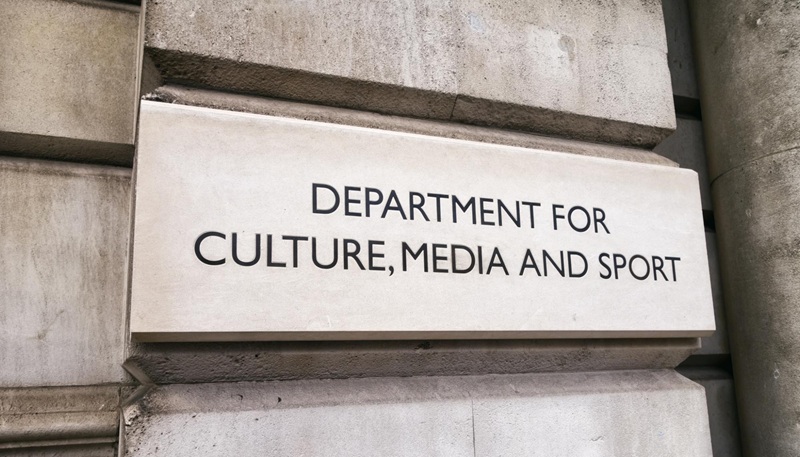
The Department for Culture, Media and Sport has published the terms of reference for the new Illegal Gambling Taskforce, which is being set up as a 12-month initiative. It will bring together a mix of gambling bodies, law enforcement, tech platforms, payment providers, regulators, government departments and trade bodies. The full list of members will not be published, and meetings will operate under Chatham House rule.
That secrecy will annoy some people, but I can see the logic. If you’re trying to disrupt illegal operators, payment routes and advertising networks, you don’t necessarily want every conversation turned into a public performance. The more important question is whether the taskforce has enough bite to go beyond polite coordination. Black market casinos don’t need another sternly worded letter. They need their routes to UK players made harder, slower and less profitable.
What the taskforce will focus on
Those are the right three areas. If you were designing an illegal gambling crackdown from scratch, you’d start with the same triangle. Stop people from seeing the sites. Stop them from paying the sites. Make sure the public bodies and private companies involved stop losing each other in email chains. It’s not glamorous, but that’s the job.
The payment angle is the one I’d watch most closely. A black market casino can survive a few search result removals or a lost social media account if it can still take money from British players. Cut off the payment route, and the whole proposition starts to crack. Players may not care which registrar hosts a site or which affiliate sent the traffic, but they definitely care when deposits fail or withdrawals get blocked. Money is the pressure point.
That’s also why payment providers and banks matter. Earlier this year, the government named major companies including Google, Mastercard, TikTok and Visa as part of the wider effort alongside law enforcement and gambling bodies. Whether the final taskforce membership is public or not, those are the kinds of organisations that have to be in the room if this is going to achieve anything. Illegal gambling is not just a gambling sector problem. It’s a platform problem, a payments problem and a discovery problem.
My view
The taskforce is welcome, but I’d rather judge it by final outcomes than impressive membership. Fewer illegal ads. Fewer working payment routes. Fewer mirror sites popping up under new names. Faster disruption when an offshore casino starts targeting British customers.
If it delivers that, it’ll be useful. If it becomes a twice-yearly talking shop with sub-groups, minutes taken and no visible pressure on the black market, players won’t feel much difference.
The timing is not accidental. Illegal gambling has become one of the loudest arguments in British gambling policy. Operators and racing figures warn that tighter regulation risks pushing players offshore. Reformers warn that the legal market keeps using the black market as a shield against necessary change. Regulators are stuck in the middle, trying to show they can disrupt illegal supply without giving licensed operators a blank cheque to resist every rule they dislike.
For players, the important point is simpler. If a site isn’t licensed for Great Britain, it’s off-limits to UK players. That remains true even if the site looks polished, offers familiar games, advertises on social media, accepts cards, pushes crypto, or appears through a search result. The black market is dangerous precisely because it doesn’t always look like the black market.
The Gambling Commission has already been stepping up disruption work. Its recent illegal-market reporting shows action against operators, advertisers, search visibility, registrars, hosts and social platforms. It also says geo-blocking and registrar or hosting blocks can be more effective than search removals, although VPN use can weaken geo-blocking. That tells you something important. Removing a dodgy result from search helps, but it’s not the same as stopping the site from functioning.
What success should look like
- Fewer illegal casino ads reaching UK users on major platforms.
- Faster blocking or removal of sites that target British players without a licence.
- Payment providers refusing to process transactions for unlicensed operators.
- Affiliate and influencer routes being squeezed, not merely scolded.
- Clear public messaging so players know that offshore does not mean harmless.
I’m pleased the taskforce isn’t being presented as something that will direct Gambling Commission operations. That would be messy. The Commission already has its enforcement role. What the taskforce should do is remove excuses around the edges. If a platform says it needs better evidence, sort the evidence route. If a payment company says it needs clearer signals, sort the signals. If agencies are duplicating work or missing handovers, fix the handovers. This is infrastructure work.
The twice-yearly meeting schedule does worry me a little, although the sub-groups are expected to meet more often. Illegal gambling doesn’t work to Whitehall’s calendar. Mirror sites, new domains, social accounts and payment routes can appear quickly. If the sub-groups are active and practical, that may not matter. If the meetings close with “see you in six months”, it absolutely will.
There is also a transparency trade-off. I understand why the government doesn’t want to publish every member and every operational detail. But the public still deserves some sign of progress. Not sensitive tactics, not private minutes, but measurable outcomes. How many payment routes have been disrupted? How many illegal adverts have been removed? How quickly are platforms responding? Are illegal operators finding it harder to reach UK players, or just changing clothes?
The taskforce also needs to avoid becoming a comfort blanket for the legal industry. Licensed operators should not be able to point at the black market and then expect every consumer protection debate to stop. The answer to illegal gambling is not weaker standards in the legal market. It’s better enforcement against the illegal one. Those are different things, and the industry knows it.
All in all, the new Illegal Gambling Taskforce is a good sign. It puts the right people, or at least the right types of people, around the same table. It focuses on the right weak points: advertising, payments and enforcement coordination. But I’ll hold the applause until we see results. Black market casinos are not frightened by taskforce language. They’re frightened when players cannot find them, can’t pay them, and can’t be fooled into thinking they’re safe. That’s the test.