
Explainer | Online Casinos | UK LIcensing
What Does the UK Gambling Commission Licence Do for You?

By Rob Hill
The short version
A UK Gambling Commission licence gives British players something more useful than vague reassurance. It means an online casino has to follow strict rules on who it can serve, how it handles customer money, how it runs bonuses, how it checks identity, how it deals with complaints, and what it must do when gambling starts looking harmful rather than fun.
After more than ten years of watching the online gambling market evolve, I find that this is still one of the most misunderstood parts of it. Players know the phrase “UKGC licensed” sounds reassuring, but many treat it as a simple quality mark, a bit like seeing a decent hygiene score in a restaurant window. That is too shallow. A UK Gambling Commission licence is not there to tell you a casino is generous, exciting, or well-designed. It’s there to make sure it meets legal standards in one of the most tightly regulated online gambling markets in the world.
That matters because spending money on gambling is not like buying a smart speaker or a toaster. If an online store sells you faulty goods, you can generally get a refund. If a gambling operator behaves badly, the consequences can be much uglier. Money can be tied up, complaints can go nowhere, vulnerable players can be ignored, and promotions can be designed to mislead rather than reward. The whole point of regulation is to stop that kind of chaos from becoming normalised. Some of us were around for the “Wild West” days of the early online casino scene. Most of us don’t want to go back there.
A licence means the casino is operating inside a real legal framework
The first thing the licence does for you is surprisingly basic, but absolutely fundamental. It forces the operator to exist in the open. A casino serving players in the United Kingdom must be licensed in order to operate legally. That means it has to identify who it is, accept ongoing supervision, and comply with licence conditions and enforceable codes of practice. In plain English, the casino isn’t just asking for your trust. It’s answerable to a regulator with the power to investigate, fine, restrict, or strip its licence away.
For the ordinary player, that changes the relationship straight away. You’re no longer relying on the goodwill of a company that may or may not feel like playing fair. You’re dealing with a business that has obligations. That distinction isn’t glamorous, but it’s the backbone of everything else. Without it, every complaint becomes a private argument between you and a faceless website. With it, there is at least a standard the operator is meant to meet.
It sets minimum standards for fairness, not just payment handling
One of the biggest myths in the casino world is that player protection is all about payment safety. That is part of it, certainly, but the licence reaches much further than that. It also affects what a casino can get away with in its promotions, terms, customer communications, and overall conduct. This is where the boring-looking regulatory stuff starts to become very important.
Take bonuses. Almost everybody likes the idea of a welcome offer until they actually read the small print. For years, parts of the industry were happy to advertise promotions loudly and explain the traps quietly. Wagering requirements could be absurd, restrictions could be tucked away, and players were often left feeling as though the offer had been designed by someone who actively disliked human beings. A UKGC licence has increasingly narrowed that sort of nonsense. Rules have tightened around incentives, transparency, and bonus terms, including limits on how punishing wagering requirements can be. So while a licensed bonus can still be underwhelming, it’s much less likely to be actively deceptive.
What the licence tends to protect you from
- Bonuses built around unrealistic terms and buried clauses.
- Operators pretending complaints are handled at their own discretion.
- Poor age and identity checks that leave the market open to abuse.
- Safer gambling tools that are hidden, vague, or decorative rather than useful.
- Customer fund information being left so unclear that players can’t tell where they stand.
It gives you safer gambling tools that are meant to be more than window dressing
This is probably the area where the licence matters most in everyday life. A licensed online casino in the United Kingdom isn’t allowed to sit back and say, “Well, the customer kept depositing, so that’s their problem.” It’s expected to offer tools and follow rules designed to reduce harm. That includes deposit and financial limit features, self-exclusion options, reality checks, and systems for spotting behaviour that may indicate trouble.
In recent years, the direction of travel has been obvious. The regulator has been pushing operators towards earlier intervention, clearer limit-setting, and better transparency around the controls available to players. In simple terms, the licence is there to make sure safer gambling features aren’t hidden in a corner of the account menu where nobody will ever see them until things are already going wrong.
Just as important is GAMSTOP. If you need to exclude yourself from online gambling sites licensed in the UK, the system only works properly because those operators are part of the same regulated environment. That’s no small thing. When someone has reached the point where they need distance from gambling, the last thing they need is to play whack-a-mole with dozens of separate sites. A UKGC-licensed market creates a shared system. That can be the difference between a useful barrier and a pointless gesture.
It forces proper checks, even when those checks are annoying
Nobody enjoys verification. Nobody wakes up thinking, “I hope a casino asks for my documents today.” But this is where players often want two contradictory things at once. They want a market free from fraud, underage gambling, criminal money, and identity abuse, but they also want no friction at all. Realistically, you can’t have both.
A UKGC licence means the operator has duties around identity verification and age checks. It also means anti-money laundering responsibilities are taken seriously. That can result in document requests, questions about payment methods, or additional checks when activity looks unusual. Yes, this can be irritating, especially if it arrives right before a withdrawal, but the alternative is a market where operators barely look at who’s gambling or where the money is coming from. Most sensible players wouldn’t actually prefer that world once they thought about it for more than ten seconds.
The awkward truth about checks
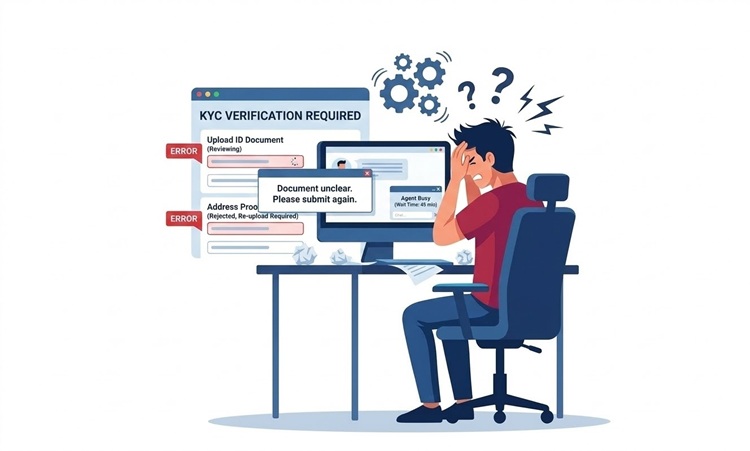
Verification can feel intrusive in the moment, but from a player protection point of view, it’s one of the clearest signs that a casino is operating in a serious legal market rather than a free-for-all. Players should think before they try to demand a world without checks. Instead, we should all demand checks that are proportionate, clear, and handled competently.
It gives you somewhere to go when a dispute turns ugly
This is the bit that many players only discover after they need it. On a properly licensed site, complaints aren’t allowed to vanish into a black hole of customer support. Operators must have a formal complaints process, and where disputes can’t be resolved internally, there’s a route towards recognised alternative dispute resolution. That is hugely important.
Anybody whos spent years around casinos will have seen the same stories crop up again and again. A withdrawal is delayed. A bonus is confiscated. An account is closed mid-argument. A customer is told the case has been “reviewed” and the decision is “final”, usually in the tone of a dismissive headmaster ending a conversation they’ve grown tired of. A UKGC licence does not mean you automatically win those disputes. It means the operator cannot simply act as judge, jury, and bored receptionist forever.
That alone is worth more than many players realise. The value of regulation is often invisible until something goes wrong. Then it suddenly becomes very visible indeed.
It creates more honesty around your money
Another area where the licence helps is customer funds. A lot of players assume that if a casino is licensed, their balance must be fully protected in all circumstances. That isn’t automatically true, and this is exactly why regulation matters. Licensed operators have obligations to explain how customer funds are held and what level of protection, if any, applies if the business fails.
In other words, the licence doesn’t magically make every pound in your account untouchable. What it does do is stop the operator from leaving you in the dark about the position. The market becomes more transparent, and that gives players a fighting chance to understand the real level of protection involved rather than making assumptions based on a logo and some cheerful compliance text on a homepage.
It also puts pressure on the casino behind the scenes
One of the most overlooked benefits of a UKGC licence is that it changes what’s happening inside the iGaming business – not just what you see on the front end. Licensed operators need policies, records, training, procedures, monitoring, and technical standards. They need to think about compliance in a way that unregulated or loosely regulated outfits often don’t. If they fail badly enough, enforcement follows. Fines, licence reviews, public criticism, and conditions attached to a licence aren’t abstract threats. They’re part of the machinery, and they’re imposed on a regular basis.
From the player’s point of view, that pressure matters because it shapes behaviour long before you ever have a problem. A casino that knows it’s being watched behaves differently from one that thinks it can bluff its way through a complaint and carry on as normal.
So what is the real benefit?
The real benefit is not that a UKGC-licensed casino feels warm and trustworthy. It’s that the operator has legal duties to you and to the market it serves. Those duties cover fairness, transparency, safer gambling, complaints, verification, and accountability. That’s far more valuable than a vague sense that the site “looks legit”.
So, what does the UK Gambling Commission licence do for you? It gives you a market with rules. It gives you safer gambling systems that are supposed to work. It gives you clearer standards on bonuses, identity checks, and customer treatment. It gives you routes to escalate complaints. It gives the regulator the power to punish operators that fall short. Most of all, it gives you something players in offshore markets often do not have, which is meaningful accountability.
That’s why, whenever we look at online casinos aimed at UK-based players, the licence is never a decorative detail. It’s the starting point. Without it, nothing else on the site really matters. With it, you’re at least playing within a system designed to give you some protection when luck turns, tempers flare, or a casino decides to test your patience. That’s not everything, but it is a lot more than a badge.
Quick questions
Does a UKGC licence make a casino completely safe?
No. Gambling still carries risk, and licensed casinos can still be frustrating in practice. What the licence does is place the operator under strict rules and direct oversight.
Why does it matter for British players specifically?
Because serving players in the UK legally requires the right licence, and that brings the casino into a regulatory system built around British law, consumer protection, and safer gambling duties.
Is an offshore licence enough for UK players?
No. If a casino isn’t properly licensed for Great Britain, it shouldn’t be treated as a legitimate option for UK players, whatever its marketing may claim.