
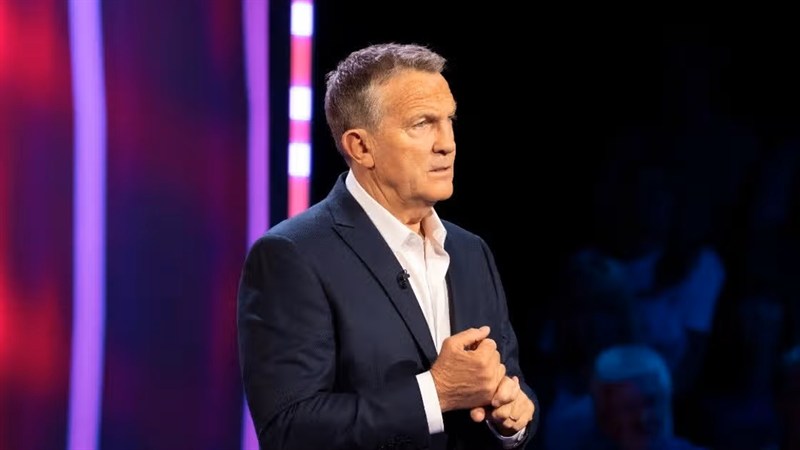
Channel 4 and Bradley Walsh fooled viewers with a fake big-money game show, then turned on the gambling industry for the way it treats its customers. The industry is furious. It’s a powerful message, but it comes from a channel that takes gambling adverts and a presenter whose best-known show has been sponsored by a bingo brand.
What Million Pound Shot did
Bradley Walsh’s Million Pound Shot went out on Channel 4 on Sunday 1 November. The first half played as a straight game show, in front of a studio audience who didn’t know it was a set-up. The losing contestant, Reece, was presented as a history teacher from Yorkshire. He was based on a real person, a former teacher called Patrick, who shared his story in the second half of the programme. Patrick said he ran up about £250,000 of debt over 13 years, at one point holding 76 online betting accounts, before placing his last bet in 2018.
The second half dropped the pretence. It went through the methods the programme says betting companies use to keep people playing, named some of the big brands, and heard from campaigners, including the Coalition to End Gambling Ads. Walsh pointed to a figure suggesting that just 5% of customers account for half of the sector’s profits, and told the studio audience that he feels strongly about how dangerous the industry can be. More than £1 billion a year is spent on gambling advertising in the UK, and the coalition’s director, Will Prochaska, wants the Government to use the programme as a reason to end it. Responses from Entain, Evoke, Sky Bet, Paddy Power, Flutter, the Gambling Commission and the Betting and Gaming Council were shown at the end.
The industry hits back
The Betting and Gaming Council didn’t wait long, accusing Channel 4 of a “misleading portrayal” of the regulated industry. Its complaint is that the fake show used practices that licensed operators couldn’t use. The game let people gamble on credit cards, which have been banned for licensed gambling since April 2020. It also gave a lot of attention to losses disguised as wins, which the BGC says have been banned for years. And contestants talked openly about being made redundant or having very little money, which are the kind of warning signs that a licensed operator would have to consider acting on. The BGC says it has sent Channel 4 evidence disputing several of the programme’s claims.
Channel 4 is standing by the show. It says the programme was carefully researched and fact-checked, that it was informed by people with personal experience of gambling harm, and that the BGC was given the chance to respond and that its response was fairly carried.
Does the BGC have a point?
Partly, yes. If you’re going to accuse an industry of something, the example should be something it’s actually allowed to do. Credit card gambling at a licensed site is against the rules, and a viewer who didn’t know that could come away thinking it’s normal. That’s a fair complaint.
But I’d be careful about how far it goes. On losses disguised as wins, the BGC’s argument is a narrow one. The example in the show was a sound playing when a customer got back less than they staked, and the BGC says that the rules ban celebratory effects rather than every sound. That’s correct as far as it goes, but I doubt many punters could tell you where a sound stops being a celebration. More importantly, there’s a big gap between what the rules say operators must do and what some of them have actually done. About two weeks ago, I wrote about L & L Europe paying £900,000 after the Commission found that one customer made 84 failed deposits in a week with no harm identified, and that an 18-year-old lost £4,000 in eight minutes without the warning signs being picked up. The BGC says that warning signs would have to be acted on, but the regulator’s own case files show that this doesn’t always happen.
Now for the hypocritical part
There’s a problem with the messengers here, and I don’t think either of them can wave it away.
To be fair to Walsh, presenters don’t sell a show’s sponsorship slots, and he doesn’t personally front Gala’s adverts. He’s also said that this is a subject he feels strongly about, and I’ve no reason to doubt that. But it’s still an uncomfortable fit. Millions of people know him as the face of a teatime quiz that’s been sponsored by a bingo brand, and now he’s telling them how dangerous the industry can be. I’d like to hear what he thinks should happen to that sponsorship.
Channel 4’s position is harder to defend, because it’s the one making the decision. You can’t spend an hour telling viewers that gambling adverts are harmful and then cash the cheques for those same adverts the following week. If the programme’s makers believe what they broadcast, the obvious next step is simple: stop taking the money. An MP has already asked the channel to do exactly that. A publicly owned broadcaster has more freedom to lead on this than most, and it’s just given itself the perfect moment to announce it.
Does hypocrisy make the show wrong?
No, and the industry shouldn’t get too comfortable with this line of argument. The harm that Patrick described is real, whoever broadcast it. Pointing at Channel 4’s advertising income doesn’t answer the question of whether gambling firms push people too hard. Nor does it excuse the enforcement cases we’ve covered all year.
What hypocrisy does is weaken the messenger. Channel 4 wanted to shock people into taking this seriously, and it did. But it also misled its own studio audience, blurred the line between licensed and unlicensed practices, and left itself open to the easiest comeback in television: what about your own money? The BGC has a point about accuracy, and Channel 4 has a point about harm. Neither side comes out of this looking clean, and until Channel 4 turns down the gambling money it’s taking, I’m not sure it’s earned the right to lecture anyone about it.