
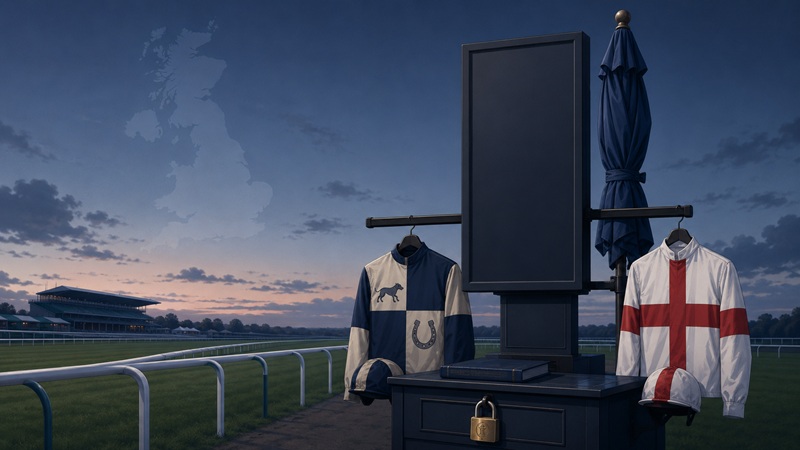
The Gambling Commission has suspended both of Nic Brereton’s bookmakers at once, the racing-mad BresBet and its six-month-old sibling Bet St George, over suspected money laundering prevention and safer gambling failures. After a summer of fines and settlements, the regulator has finally reached for the sharpest tool, and the story behind the double strike should be sobering reading for other operators.
The news in A NUTSHELL
What: The licences of BresBet Ltd and Bet St George Ltd were suspended with effect from 28 August, as the Commission opened formal reviews into both under section 116 of the Gambling Act.
Why: Suspected failures in social responsibility and anti-money-laundering controls at both operators.
The link: Nic Brereton founded and directs both companies, which share an office block and, until last month, a managing director.
If you have money on either site: Your account still works and withdrawals remain open, which the Commission has made a condition of the suspension. My advice is to get your balance out now, screenshot everything, and keep any confirmation emails. A suspension isn’t an insolvency, but the “goes-bust guide” on this site explains why a balance at a troubled operator is never where your money should sit while you wait for news.
If you follow British racing, you’ll know BresBet even if you’ve never bet there. Founded in 2021 by Nic Brereton, a Sheffield entrepreneur who owns racehorses and greyhounds and is enthusiastic about both, it built itself as the anti-corporate bookie: “Back to bookmaking”, telephone wagering, Best Odds Guaranteed, a charitable foundation for horse and greyhound welfare, and sponsorships scattered across the sport from Uttoxeter and Warwick to the East Anglian Greyhound Derby and Sheffield’s Steel City Cup, with Gold Cup-winning jockey Paddy Brennan fronting its “Legends” campaign. Bet St George arrived only in March this year as Brereton’s second act, an England-themed brand launched into the teeth of the tax rises with the founder telling the trade press that “if you’ve got the right brand and the right cost of service” there was still room for a newcomer. Six months later, both of his licences are suspended. Whatever else this is, it’s the end of a romantic story about small bookmaking, at least for now.
Two companies, two licences, one strike: what connects them?
The question I found most interesting is the one the Commission’s short statement doesn’t answer: how do two separately licensed private companies end up suspended on the same day for the same suspected failings? The regulator hasn’t published a lot of detail, so what follows is my informed reading of the facts rather than anything confirmed, but those facts are telling. The companies share a founder and director in Brereton. They share an office block. Until last month, they shared a managing director, Sarah Laycock, who resigned from both companies on the same day in early August, roughly three weeks before the suspensions landed. Separate licences on paper; one operation in most of the ways that matter to a compliance inspector.
That’s almost certainly the answer in miniature. Small operators run shared functions, one compliance team, one set of AML policies, one customer interaction playbook, stretched across however many brands the founder launches. It keeps costs low, and it means a weakness found in one brand is presumptively present in the other, because it’s the same people running the same procedures under a different logo. When the Commission’s initial enquiries flagged concerns, reviewing one licence without the other would have been poor practice. There’s a bigger question for the regulator on Bet St George, though: it passed a licence application less than a year ago, a process that assesses exactly the policies it’s now suspected of failing, and a brand going from freshly-approved to suspended in six months suggests either controls that existed on paper but not in practice, or something that was missed during the application process.
Why a suspension and not another fine?
Regular readers have watched this summer’s enforcement parade with me: Betfred’s £900,000 in June, QuinnBet’s £609,104 a fortnight ago, both resolved as settlements. So why do those firms keep trading while Brereton’s are switched off? The distinction is about time and risk. A settlement is how the Commission closes the book on historic failings that have since been fixed, by an operator that cooperated and remediated; the harm exists only in the past tense. A suspension is the opposite instrument: it’s not a verdict or a punishment but an emergency brake, applied mid-review when the regulator suspects failings serious enough, and current enough, that it won’t let the business keep operating without either satisfactory answers or satisfactory changes to process. As an outcome, it says the Commission wasn’t satisfied the risk could be contained, whether because of what the enquiries found, how the operators responded, or doubts that firms this size could evidence their controls quickly.
There’s a pointed irony in the timing. Only weeks ago, a safer gambling advocate publicly criticised the Commission for always fining and never suspending, arguing operators treat penalties as the price of doing business. Whatever prompted this case, the regulator has just demonstrated, on two licences at once, that the sharper tool exists and gets used.
It also fits the trajectory I’ve been charting all year. The Commission has telegraphed that it’s running out of patience: settlements now come stapled to warnings that everyone else is on notice, repeat offenders are promised harder treatment, and the TGP Europe affair showed what the endgame looks like when a firm can’t or won’t meet the standard. Fines are for operators the regulator still trusts to fix themselves. Suspensions are for the ones it isn’t sure about, and that’s the category Brereton’s brands woke up in on 28th August.
Is this the end of the road for Brereton?
There is bound to be speculation about this. Suspensions can be lifted; the Commission’s own statement says these last until the issues are fixed to its satisfaction, and operators have come back from the naughty step before. But consider what survival requires here. A suspended bookmaker earns nothing while its costs continue, and small racing-focused firms don’t sit on enormous cash reserves. The remediation the Commission will demand – proper automated monitoring, staffed AML functions, evidenced customer interaction – is exactly the enterprise-grade overhead I wrote about after what happened to QuinnBet, the kind that strains even profitable mid-sized firms in the 40% duty era. The reputational wound is also a bad one in a tight-knit racing community where BresBet’s whole identity was trustworthiness, and where sponsorship partners from racecourses to ambassadors now face difficult questions. And hovering over all of it, a section 116 review can reach beyond companies to the personal licences of the people running them, which makes the founder’s own standing part of what’s under the microscope.
Add it up, and I’d put it this way: if the suspected failings prove to be fixable and the review moves fast, a chastened, smaller BresBet could plausibly return, because the racing goodwill Brereton spent five years building is still there. But every structural force points the other way, and recent history says small operators in this position more often surrender or sell than reopen. The likelier ending is the silent one: a review that concludes, brands that never relaunch, and another pair of names for the ever-growing file of departed licensees. I’d love to be wrong, because the market is poorer every time a genuine independent leaves it. The evidence from 2026 is that being genuine is no longer enough.
The takeaway lesson sits where it’s sat all year. The compliance bar in British gambling now stands at a height that passion, personality and racing romance can’t clear on their own, and the machinery that catches the giants is starting to catch the small firms too. For players, the practical takeaways are simple: your money at either brand remains withdrawable, so withdraw it; a suspension is the system protecting you, not failing you; and the fondness you feel for a friendly bookie tells you nothing about the state of its back office. Brereton’s brands promised a return to old-fashioned bookmaking. The suspension is a reminder that the old-fashioned part of this industry is gone for good.